Home › Best OTC Toenail Fungus Treatment

Best Over the Counter Toenail Fungus Treatment (2026): What Works and What Doesn't

Affiliate Disclosure: This page contains affiliate links. We may earn a commission at no extra cost to you. Evaluations are independent and evidence-based. Full disclosure →
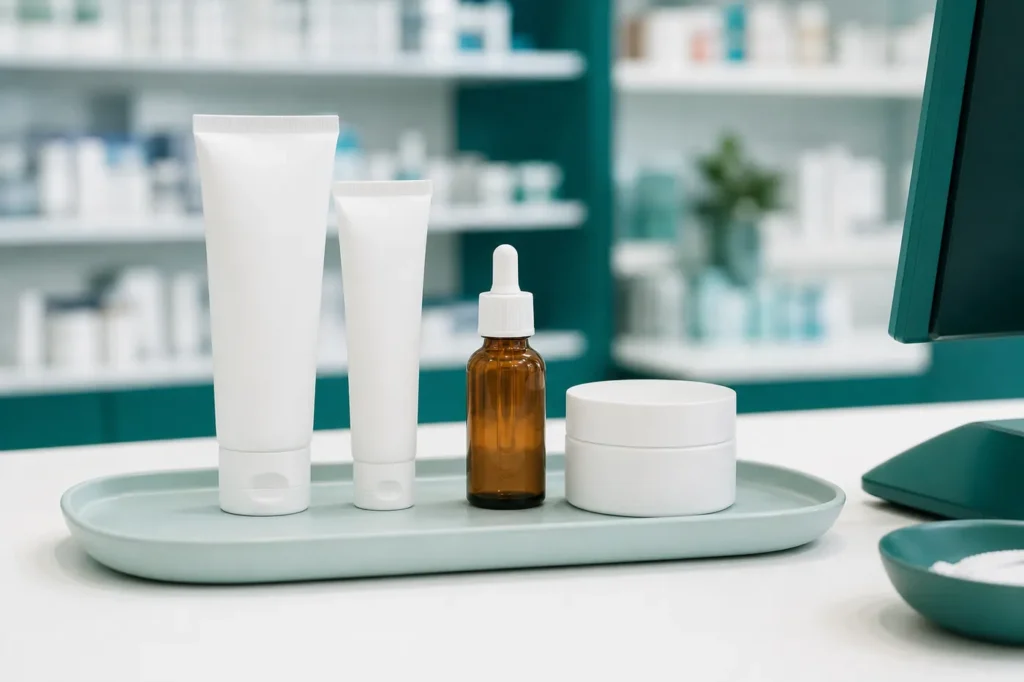
Row of plain unbranded OTC antifungal tubes and bottles on a pharmacy counter for our OTC picks

Quick Answer: Best OTC Toenail Fungus Treatment

Short answer: for a mild, early nail infection, the best over-the-counter toenail fungus treatment is a 1% tolnaftate or 25% undecylenic acid solution (such as Fungi-Nail anti-fungal liquid or FungiCure antifungal liquid, both tolnaftate 1%, or Sally Hansen No More Fungus, undecylenic acid 25%) brushed on twice a day, with any athlete’s foot treated at the same time. Expect months, not weeks, and switch to a prescription if the nail is thick or several nails are involved.

No OTC product is FDA-approved to treat onychomycosis. OTC antifungals (undecylenic acid, tolnaftate, Lamisil AT cream) are approved for athlete’s foot and ringworm—not nail fungus. They may help with very early, superficial nail infections or as maintenance after prescription treatment. The OTC actives grade Limited Evidence for nail fungus; branded products that have never been tested themselves (Fungi-Nail, Kerasal, the natural blends) grade Anecdotal Evidence. For established nail infection, prescription oral terbinafine (~38% complete cure) is significantly more effective.

At a Glance

Evidence Strength (top pick)

StrongModerateLimited ✓Anecdotal

How we grade evidence

Key Facts

Top pick

Fungi-Nail (tolnaftate 1%)

FDA-approved for nails

No OTC product

OTC trial period

About 3 months, then go Rx

Options compared

5 in the comparison table

Best Over the Counter Toenail Fungus Treatment: Our Top Picks at a Glance

All OTC toenail fungus products carry the same important caveat: no OTC product is FDA-approved to treat onychomycosis. The products below are evaluated on the strength of their active ingredients, their FDA approval status for related skin fungal conditions, and the available (limited) clinical data for nail use.

How We Graded Each Over the Counter Toenail Fungus Treatment Pick

We grade every treatment using the same evidence framework. See how we grade treatments for the full methodology. For OTC toenail fungus products, all receive Limited evidence grade because:

Our Over the Counter Toenail Fungus Treatment Picks, Reviewed One by One

Undecylenic Acid (Sally Hansen No More Fungus, FungiCure Maximum Strength)

Undecylenic acid is the most concentrated OTC antifungal drug available. At 25% concentration (Sally Hansen No More Fungus, FungiCure Maximum Strength), it has FDA-approved monograph status for athlete’s foot. It disrupts fungal cell membrane function. No large RCT has demonstrated reliable mycological clearance of onychomycosis. Best use case: very early superficial nail infection, maintenance after prescription clearance, treating co-existing athlete’s foot. Evidence grade: Limited Evidence.

Tolnaftate (Tinactin, generic)

Tolnaftate is an OTC antifungal with FDA monograph approval for athlete’s foot, ringworm, and jock itch. It inhibits fungal enzyme synthesis. Available as creams, sprays, and powders. Very limited nail penetration—it is most useful for treating athlete’s foot to reduce the skin reservoir and prevent re-seeding of nails. Evidence grade: Limited Evidence.

Clotrimazole (Lotrimin AF)

Clotrimazole is a broad-spectrum azole antifungal with FDA approval for athlete’s foot, ringworm, and yeast infections. Available as OTC cream and solution. Nail penetration is poor. No quality RCT has demonstrated reliable onychomycosis clearance with OTC clotrimazole. Evidence grade: Limited Evidence.

Lamisil AT 1% Cream (terbinafine)

Lamisil AT is an effective OTC antifungal for skin—athlete’s foot, ringworm. The same terbinafine in oral form (prescription) is the most effective nail fungus medication. However, the 1% topical cream cannot achieve therapeutic nail-bed concentrations. Best use: treating active athlete’s foot. Not effective as a standalone nail fungus treatment. Evidence grade: Limited Evidence for nail use.

Vicks VapoRub (thymol + camphor)

Vicks VapoRub is not registered as an antifungal drug, but it contains thymol and camphor with antifungal activity in lab tests. Derby 2011 (18 patients, uncontrolled case series): positive response in 15/18 participants, mycological and clinical cure in 5/18 (27.8%) at 48 weeks. This is a small, uncontrolled study with high risk of bias. Low risk and inexpensive. Evidence grade: Anecdotal Evidence. See our detailed Vicks VapoRub for toenail fungus guide.

Kerasal Fungal Nail Renewal (urea 10% + lactic acid)

Kerasal is not an antifungal drug. Urea 10% is a keratolytic—it softens and reduces the thickness of discolored nails, improving their cosmetic appearance. Some users apply Kerasal in combination with antifungal products to thin the nail and potentially improve antifungal penetration. No clinical trial has established this combination as effective for mycological clearance. Evidence grade: Anecdotal Evidence (urea: Limited) for clinical clearance. Useful for cosmetic nail improvement.

Tea Tree Oil

Tea tree oil (terpinen-4-ol) has antifungal activity in lab tests and one small pilot RCT (Syed 1999, ~60 participants) showing modest improvement vs placebo. It has not been tested in a large independent RCT for onychomycosis. Evidence grade: Limited Evidence. See our tea tree oil for toenail fungus guide.

Best Over the Counter Toenail Fungus Treatment Comparison Table

ProductActive IngredientGradeFDA Nail Approval?Best For
Fungi-NailTolnaftate 1%Anecdotal Evidence (tolnaftate: Limited)No (foot approved)Early infection, maintenance
TinactinTolnaftate 1%Limited EvidenceNo (foot approved)Athlete’s foot treatment/prevention
Lamisil ATTerbinafine 1%Limited EvidenceNo (foot approved)Athlete’s foot (not nail)
Vicks VapoRubThymol + camphorAnecdotal EvidenceNoVery mild infection trial
KerasalUrea 10% + lactic acidAnecdotal Evidence (urea: Limited)NoCosmetic nail improvement
Natural blends (e.g., KlaroNail, Kerassentials)Undecylenic acid 5% or essential oilsAnecdotal Evidence (undecylenic acid, tea tree oil: Limited)NoNatural-first readers, mild cases (see blends)

Active Ingredients That Matter in OTC Toenail Fungus Treatments

How Long an OTC Toenail Fungus Treatment Takes to Work

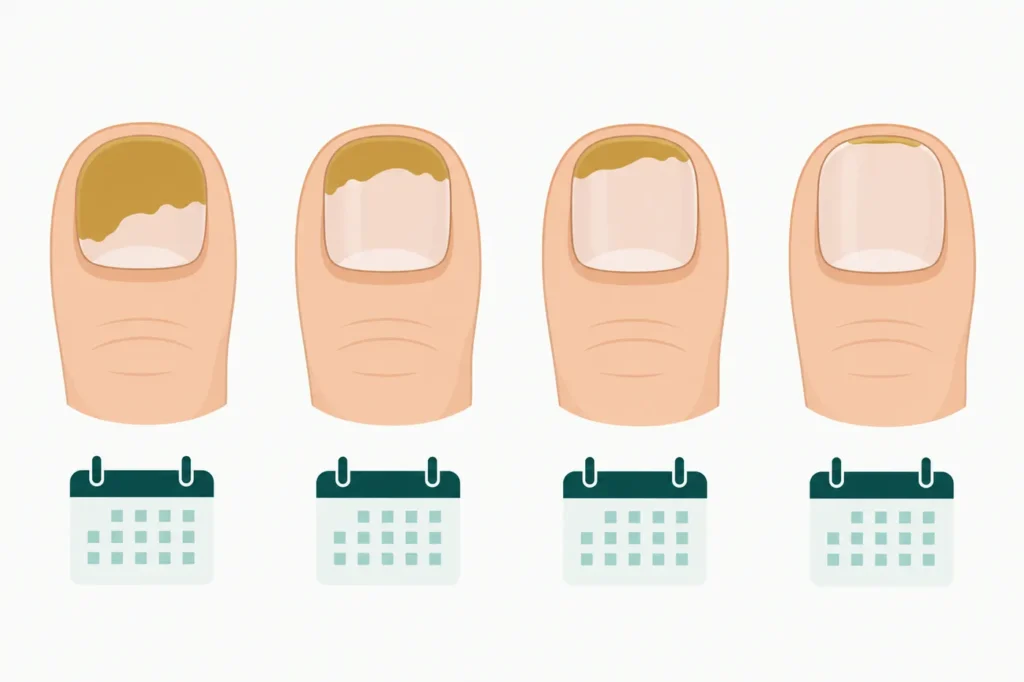
The honest answer: probably not fast enough to clear established infection without other interventions. Here is what the biology says:

Illustration of a toenail slowly growing out clear nail from the base over many months

OTC Toenail Fungus Treatment Side Effects and Safety

OTC products are generally safe for topical use, but some considerations apply:

How to Use an OTC Toenail Fungus Treatment So It Has a Fair Chance

Every OTC antifungal is sold under the FDA’s monograph for athlete’s foot and ringworm. That rule requires the label to say the product is “not effective on the scalp or nails” (21 CFR 333.250). The main problem is that topicals don’t get through the nail plate well. Dermatologist Christopher Hull, MD, made the same point in an April 2026 University of Utah Health interview, adding that most home and OTC remedies “have not been investigated with really good clinical trials.” If you still want to try OTC first, these steps give it the best chance:

  1. Trim and file. Cut the nail short and gently file down thick or white areas. Trimming removes some infected material (Utah Health, 2026).
  2. Wash and dry thoroughly. Apply only to clean, fully dry skin and nail.
  3. Apply twice daily. Use a thin layer morning and night, as the monograph directions state, covering the nail, the skin around it and the skin between the toes.
  4. Treat athlete’s foot too. Untreated skin infection reseeds the nail (how the two are linked).
  5. Judge it by new growth. Mark the border between clear and cloudy nail and check it monthly. Toenails take 12–18 months to grow out fully.
  6. Know when to stop. If the skin is no better in 4 weeks, or the nail is thickening, spreading or painful, see a clinician (21 CFR 333.250; AAD).

If OTC isn’t enough, compare every prescription and OTC option in our best toenail fungus treatment guide.

When a Prescription Beats Any Over the Counter Toenail Fungus Treatment

OTC treatment is appropriate only for very early or superficial nail involvement. Seek prescription evaluation if:

Prescription oral terbinafine achieves approximately 38% complete cure in the FDA label trials (Lamisil prescribing information)—far ahead of any OTC option. See the best toenail fungus treatments overview for all options. See our full medication guide for prescription details.

Best Over the Counter Toenail Fungus Treatment: Common Questions

Among FDA-registered OTC antifungal drugs, undecylenic acid at 25% (Sally Hansen No More Fungus, FungiCure Maximum Strength) is the highest-concentration active ingredient available without a prescription. That said, being the highest-concentration OTC antifungal does not mean it has proven efficacy for nail fungus—no OTC product is FDA-approved to treat onychomycosis. For established nail infection, prescription oral terbinafine has the best evidence. See our medication guide.

Fungi-Nail (tolnaftate 1%) can help with very mild or early nail involvement and is effective for treating co-existing athlete’s foot. No large RCT has demonstrated reliable mycological clearance of established onychomycosis with Fungi-Nail. It is a reasonable first step for early cases or as maintenance after prescription treatment clears the infection.

No evidence-based timeline exists because no OTC product has been tested in a large nail-fungus RCT. Most practitioners suggest a 3-month trial. If no improvement is visible at 3 months, escalate to prescription treatment. Even if the OTC approach helps, full nail regrowth takes 12–18 months regardless of treatment type.

Tolnaftate is FDA-approved for athlete’s foot and ringworm (skin infections), not for nail fungus. Its nail penetration is very limited. It may help prevent athlete’s foot from spreading to nails, and some practitioners suggest it as an adjunct for very early nail involvement. For established nail fungus, prescription treatment is significantly more effective.

Prescription oral terbinafine (Lamisil) has the best clinical evidence: approximately 38% complete cure in the FDA label trials (Lamisil prescribing information). Prescription topical nail solutions (Jublia, Kerydin, ciclopirox) achieve 6–18% clearance with no systemic side effects. All prescription options require a confirmed diagnosis from a healthcare provider. See our best toenail fungus treatment guide (prescription and OTC) for a full comparison.

Lamisil AT (terbinafine 1%) is sold for athlete’s foot, and OTC antifungal labels state they are not effective on nails (21 CFR 333.250). It can help clear athlete’s foot that keeps reinfecting the nail. Terbinafine works on the nail mainly as a prescription pill. See terbinafine cream for toenail fungus.

Yes. The same fungi cause both, and infected skin between the toes is a common source of reinfection. Treat the skin with an OTC cream or spray for the full label period (usually 4 weeks).

It helps. Trimming and gently filing a thick nail removes some infected material and gives a topical a thinner surface to work on (University of Utah Health, 2026). Never file so deep that it hurts or bleeds, and don’t do it yourself if you have diabetes.

They can help. The AAD notes that some people use maintenance treatment to prevent another infection, and an OTC antifungal on the feet and in shoes is a common way to do it. Recurrence after treatment runs about 10% to 50% (AAFP, 2013).

Sources

  1. FDA. OTC monograph for antifungal drug products. CFR 21 §333.
  2. L.I.ON. study. Terbinafine vs itraconazole. BMJ 1999;318:1031–1035.
  3. Derby R et al. Novel treatment using over-the-counter mentholated ointment. J Am Board Fam Med 2011;24(1):69–74.
  4. Syed TA et al. Tea tree oil and butenafine. Tropical Medicine and International Health 1999.
  5. Westerberg DP, Voyack MJ. Onychomycosis: current trends in diagnosis and treatment. Am Fam Physician 2013;88(11):762–70.
  6. 21 CFR 333.250, Labeling of topical antifungal drug products (directions: twice daily; “not effective on the scalp or nails”). ecfr.gov
  7. University of Utah Health, The Scope. Nail Fungus Treatments: What Works and What Does Not (Christopher Hull, MD; updated 17 Apr 2026). healthcare.utah.edu
  8. American Academy of Dermatology. Nail fungus: diagnosis and treatment (last updated 26 Jun 2025). aad.org

Medical disclaimer: Informational only. Not a substitute for professional medical advice. Consult a qualified healthcare provider before starting any treatment.

Get a treatment matched to your nails

Answer 4 quick questions and see evidence-graded picks for your situation.