Home › Treatments › Laser Treatment for Toenail Fungus

Laser Treatment for Toenail Fungus: What the Evidence Actually Shows (2026)

Disclosure: This page contains internal links to review pages and product guides. Some of those pages may contain affiliate links. Our evidence grades are based on published research and are not affected by commercial relationships. See our disclosure policy →
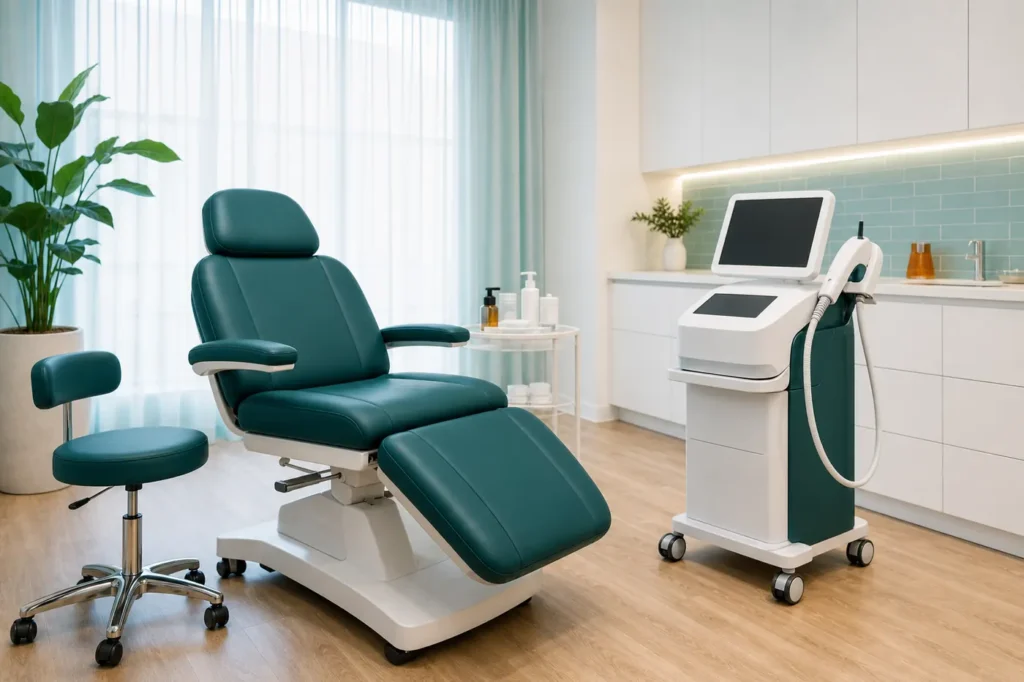
Podiatry clinic laser device beside an exam chair, used for laser treatment of toenail fungus

The Short Answer

Laser treatment is marketed as a painless, pill-free option (no daily medication, no liver tests), but the science is more complicated. Laser treatment (Nd:YAG, diode) uses focused light energy to heat and disrupt fungal cells beneath the nail plate. Devices are FDA-cleared for “temporary increase of clear nail” — not to cure onychomycosis. Reported complete cure rates in studies vary widely (0–74% at 12 months), reflecting inconsistent protocols and endpoints (PMC11151181, 2024). Most courses require 3–4 sessions. Cost: typically $500–$1,500 out of pocket. Insurance coverage is rare.

At a Glance

Evidence Strength

StrongModerate ✓LimitedAnecdotal

How we grade evidence

Time to Results

Sessions3–4 mo12 mo12–18 mo
3–4, spaced 4–6 weeks apartNew clear growth at the baseTrials report 0–74% complete cureFull nail grow-out

Key Facts

FDA status

Cleared for temporary increase of clear nail

Cost

$500–$1,500 per course

Best for

People who can’t take oral antifungals

Insurance

Rarely covered (cosmetic)

Laser Treatment for Toenail Fungus: How It Works

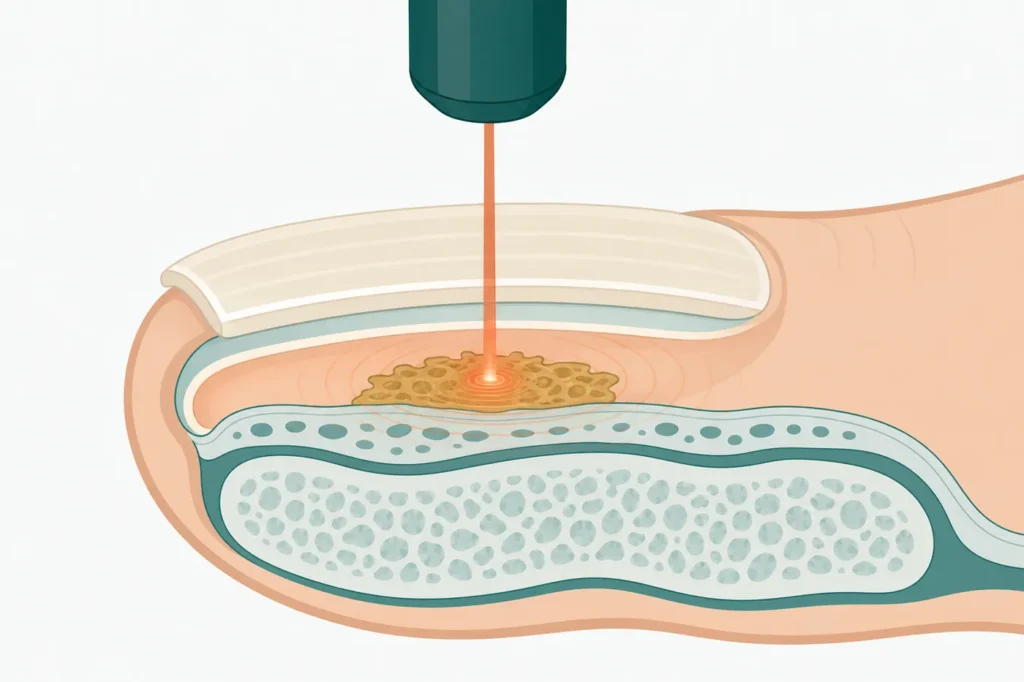
Laser devices used for toenail fungus deliver focused light energy — typically in the near-infrared range — that penetrates the nail plate and is absorbed by the fungal colony in the nail bed. The heat generated disrupts the structure of fungal cells through a process called selective photothermolysis. The idea is to target the fungus without damaging surrounding skin and nail tissue.

Diagram of a laser beam passing through the nail plate to heat fungus in the nail bed

Main laser types used for toenail fungus

  • Nd:YAG (1064 nm): The most studied laser for onychomycosis. Penetrates deeply through the nail plate. Commonly used in podiatry and dermatology clinics. Some patients experience heat sensation during treatment.
  • Diode lasers (870–930 nm): Used in various commercial systems. Different wavelengths have different nail-penetration characteristics.
  • Cold (low-level) laser — Lunula: Uses two wavelengths (405 nm and 635 nm) at very low power. The mechanism claimed is photobiomodulation and immune stimulation rather than direct thermal destruction. No significant heat sensation.

What the nail grows out does (and does not) mean

Laser treatment does not speed up nail growth. Even if the fungal colony is disrupted, the existing infected nail material must grow out naturally — at the same rate of approximately 1–3 mm per month. This means you will not see a fully clear nail for 12–18 months regardless of which treatment you use, including laser. “Clear nail” visible immediately after laser treatment is an unrealistic expectation; the goal is new clear nail growth from the base over time.

Laser Toenail Fungus Treatment Success Rates (What the Studies Show)

Evidence grade for laser treatment: Moderate Evidence (Moderate Evidence). There is published trial data on laser for onychomycosis, but the results are inconsistent and study quality varies considerably.

A 2024 systematic review and meta-analysis (PMC11151181) found that laser therapy significantly improved mycological cure rates compared to placebo, but head-to-head trials against oral terbinafine showed mixed results. Some studies favoured laser, others favoured terbinafine, and several found no significant difference — largely because studies used different protocols, laser types, outcome measures and follow-up periods.

Key numbers from the literature

  • Complete cure rates in published trials range from roughly 0% to 74% at 12-month follow-up, reflecting the wide variation in study design and laser type (Bristow, J Foot Ankle Res, 2014).
  • Mycological cure rates (no live fungus on culture) are typically 30–60% across studies.
  • Recurrence rates post-laser have not been as well characterised as for oral antifungals.
  • The Lunula cold laser has shown complete cure rates of around 25–34% at 180 days in manufacturer-funded studies; independent replication is limited.

Important context: Many published laser trials are small (fewer than 50 patients), lack proper control groups, or are sponsored by laser device manufacturers. The best-designed independent studies tend to show more modest benefits compared to manufacturer-funded research. UCLA Health has noted that laser may temporarily improve the appearance of the nail without achieving the same mycological eradication rates as oral antifungals (UCLA Health, 2024).

Laser vs Terbinafine vs Topicals

When comparing laser to the other main treatment categories, oral terbinafine still holds the strongest evidence base for established onychomycosis. Laser offers an alternative for patients who cannot or prefer not to take oral medication, but the out-of-pocket cost and inconsistent evidence are significant factors to weigh.

TreatmentTypeEvidenceReported cureEst. cost per courseSessions / duration
Oral terbinafinePrescription pillStrong Evidence~38% complete cure1~$10–$40/mo (generic)12-week course (once daily)
In-office laser (Nd:YAG / diode)In-office procedureModerate Evidence0–74% (varies widely)2~$500–$1,5003–4 sessions, 4–6 weeks apart
Prescription topical (Jublia)Topical RxModerate Evidence~15–18%3$65–$830+ per bottle48 weeks, once daily
OTC topical (undecylenic acid)OTC topicalLimited EvidenceNot established for nail~$8–$20Daily, 6–12+ months

Superscripts correspond to sources below. Cure rate figures represent typical ranges from published trials; individual results will vary. See our full treatment comparison table for all options.

How Many Laser Sessions Toenail Fungus Needs

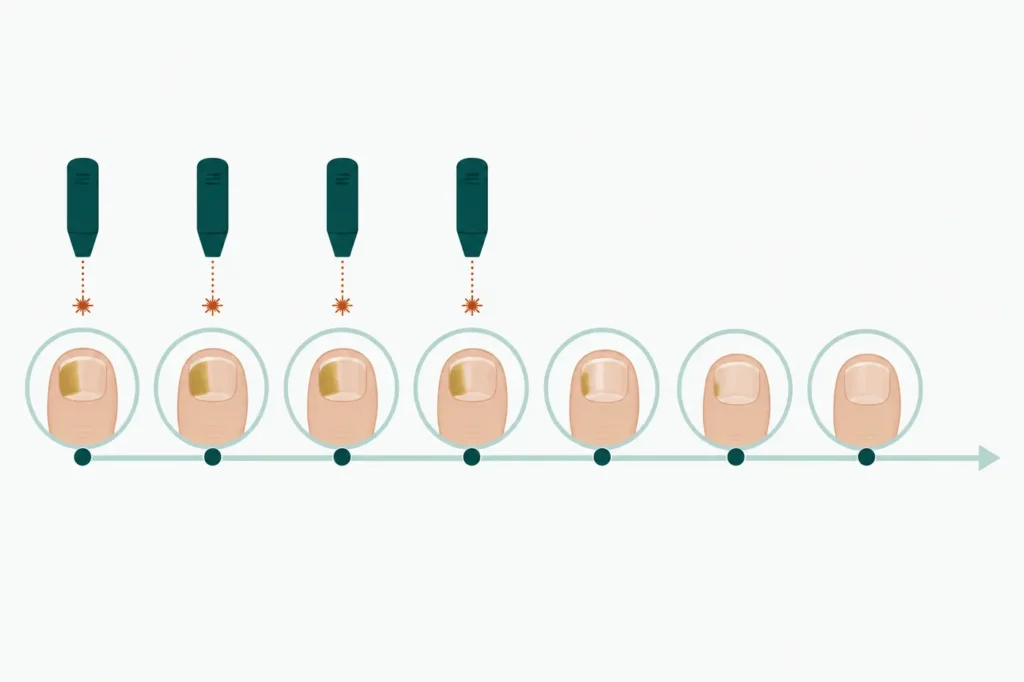
Most commercial laser protocols for toenail fungus use 3–4 treatment sessions, spaced approximately 4–6 weeks apart. Some clinics offer fewer sessions or more. The number varies depending on:

  • The laser type and manufacturer protocol (each device has its own recommended schedule).
  • Severity of the infection (more nails, thicker nails, more advanced infection may require more sessions).
  • Clinician preference and in-clinic experience.
Illustration of three to four laser sessions followed by months of nail regrowth

There is no consensus on the optimal number of sessions. Published trials have used anything from 1 to 10 sessions. More sessions do not necessarily produce better outcomes — the nail’s biology (how fast it grows and how well the new nail bed is free of fungus) matters more than laser dose alone.

What to expect between sessions

Unlike oral antifungals, where you can often feel confident the medication is working systemically, laser treatment has no systemic action. The nail will not change appearance for weeks or months — new clear growth from the base is the sign to look for, typically visible at 3–4 months into the treatment course. If you see no new clear nail growth at the base after 3–4 months from your first session, discuss this with the treating clinician.

Laser Toenail Fungus Treatment Cost and Insurance

Laser treatment for toenail fungus is almost universally considered a cosmetic procedure by US insurers, including Medicare and Medicaid. This means the cost is typically paid entirely out of pocket by the patient.

Typical cost ranges (US, 2026)

  • Per session: $150–$500 depending on clinic and geographic area.
  • Per course (3–4 sessions): $500–$1,500 on average.
  • Some clinics charge per nail ($50–$100 per nail per session) rather than per session.

These are significantly higher than a 12-week course of generic oral terbinafine (~$30–$120 with insurance or discount cards). If you are weighing laser against prescription oral antifungals purely on cost, oral treatment is far less expensive when accessible. Compare laser with every other option, course by course, in our toenail fungus treatment cost tracker.

When might laser be worth considering despite the cost?

  • You have a contraindication to oral antifungals (liver disease, problematic drug interactions).
  • You have tried oral antifungals and they were not effective or were not tolerated.
  • You prefer not to take systemic medication for personal or medical reasons.
  • Your clinician recommends laser as a component of a combined treatment plan.

At-Home Laser Devices for Toenail Fungus

Several companies sell consumer-grade laser or light devices marketed for home use on toenail fungus. These devices typically operate at lower power levels than in-office clinical lasers and have a different FDA regulatory status. Most are cleared as “general wellness” or low-risk devices rather than as medical treatment devices.

What the evidence says about home lasers

Independent clinical evidence for consumer home laser devices is significantly weaker than for in-office clinical lasers, which themselves already have mixed results. Most published at-home device studies are small, manufacturer-sponsored and lack rigorous controls. No consumer-grade at-home laser device has established clinical trial evidence comparable to prescription oral antifungals.

Key things to check before buying a home laser device

  • FDA clearance status: Look for a 510(k) clearance number. General wellness clearance is not the same as medical device clearance for onychomycosis.
  • Published independent trial data: Is there peer-reviewed evidence beyond manufacturer-funded studies?
  • Return policy: Given the uncertain evidence, a money-back guarantee is worth checking before purchasing.

For people who prefer to avoid oral medication and cannot access in-office laser, OTC topicals (undecylenic acid, tolnaftate) are another option with a comparable or better independent evidence base compared to home laser devices. See our OTC treatment guide.

Laser Treatment Side Effects and Who It Suits

Side effects of in-office laser treatment

In-office laser treatment for toenail fungus is generally considered safe and well tolerated. The most commonly reported side effects are:

  • Warmth or heat sensation during treatment (more common with Nd:YAG at higher settings).
  • Temporary redness around the treated nail.
  • Rare: pinpoint bleeding if the laser setting is too high or the nail is very thin.

Serious adverse events are uncommon in published trials. Cold (low-level) lasers like the Lunula have essentially no thermal side effects by design.

Who is a good candidate for laser treatment?

  • Adults with mild to moderate onychomycosis affecting 1–3 nails.
  • People who cannot take oral antifungals due to liver conditions or drug interactions.
  • Patients who prefer a non-systemic approach and can afford the out-of-pocket cost.
  • Those who have already completed oral treatment and want adjunct support during nail grow-out.

Who should discuss with a clinician first

  • People with diabetes or peripheral neuropathy (reduced sensation may mask discomfort signals).
  • Patients with active skin conditions on the feet (psoriasis, eczema) around the treatment area.
  • Anyone taking photosensitising medications.

FDA Clearance for Toenail Fungus Lasers: What “Clear Nail” Means

Several laser systems have received FDA clearance for a specific indication: “temporary increase of clear nail in patients with onychomycosis.” This is not the same as FDA approval or as clearance to cure or treat onychomycosis.

What FDA clearance means here

FDA 510(k) clearance establishes that a device is substantially equivalent to a legally marketed predicate device — it does not require proof of efficacy through rigorous clinical trials the way drug approval does. The specific cleared indication — “temporary increase of clear nail” — means the device may help nails look clearer temporarily, not that it has been proven to eradicate the fungal infection.

Why this matters when evaluating laser claims

  • A clinic saying their laser is “FDA-cleared” is not claiming it has the same evidence base as a drug approved for onychomycosis.
  • No laser device is FDA-approved to cure toenail fungus.
  • The cosmetic improvement “clear nail” endpoint is different from the mycological cure endpoint used in drug trials. A nail can look clearer without the fungus being eradicated.

For a full breakdown of treatment comparisons including evidence grades, see our treatment comparison guide. If you have been considering laser and want to understand your prescription options, our terbinafine guide explains what to expect.

Laser Treatment for Toenail Fungus: Common Questions

The two main drawbacks are cost and inconsistent evidence. In-office laser treatment typically costs $500–$1,500 out of pocket, as it is considered cosmetic by most insurers including Medicare. The clinical evidence is also mixed: published cure rates vary from 0% to 74% depending on the study, laser type, and outcome measure used. By comparison, oral terbinafine has a consistent ~38% complete cure rate across multiple independent trials at a fraction of the cost (generic: ~$30–$120 for a 12-week course).

No. Medicare and most private US health insurers classify laser treatment for toenail fungus as a cosmetic procedure and do not cover it. Prescription oral antifungals (terbinafine, itraconazole) for confirmed onychomycosis are typically covered under Part D prescription drug plans or private insurance. Always verify your specific plan coverage before treatment.

Most clinical protocols use 3–4 sessions spaced 4–6 weeks apart. Some clinics use 2 sessions; others use up to 6–10 for severe cases. There is no universal consensus on the optimal number of sessions, and more sessions do not automatically produce better results. The treating clinician will recommend a protocol based on the device they use and the severity of your infection.

Mayo Clinic describes oral antifungal medications — particularly terbinafine and itraconazole — as the most effective treatments for nail fungal infections. Laser treatment is listed as one of several procedure options, with the note that some studies show it is effective but that it may not provide a complete cure. Mayo Clinic recommends seeing a clinician to confirm the diagnosis, as other conditions (nail psoriasis, dystrophy) can resemble onychomycosis, and treating the wrong condition wastes time and money.

Sources

  1. Evans EG, Sigurgeirsson B. Double blind, randomised study of continuous terbinafine compared with intermittent itraconazole in treatment of toenail onychomycosis. BMJ. 1999;318(7190):1031–1035. (L.I.ON. trial)
  2. Bristow IR. The effectiveness of lasers in the treatment of onychomycosis: a systematic review. J Foot Ankle Res. 2014;7(1):34.
  3. Elewski BE, Rich P, Pollak R, et al. Efinaconazole 10% solution. J Am Acad Dermatol. 2013;68(4):600–608.
  4. Ortiz AE, Avram MM, Wanner MA. A review of lasers and light for the treatment of onychomycosis. Lasers Surg Med. 2014;46(2):117–124.
  5. PMC11151181: Efficacy of laser therapy in comparison with other methods for the treatment of onychomycosis — systematic review and meta-analysis. 2024.
  6. UCLA Health. Laser treatment for toenail fungus may not provide cure. uclahealth.org. Accessed November 2026.

Medical disclaimer: This content is for informational purposes only and is not a substitute for professional medical advice, diagnosis or treatment. Always consult a qualified healthcare provider before starting any treatment.

Not sure which treatment is right for you?

Use our interactive treatment finder or compare all options side by side.