Home › Lunula Laser for Toenail Fungus

Lunula Laser for Toenail Fungus (2026): What the Evidence Says

Affiliate disclosure: Some links on this page are affiliate links. We may earn a commission at no extra cost to you. See our disclosure policy →
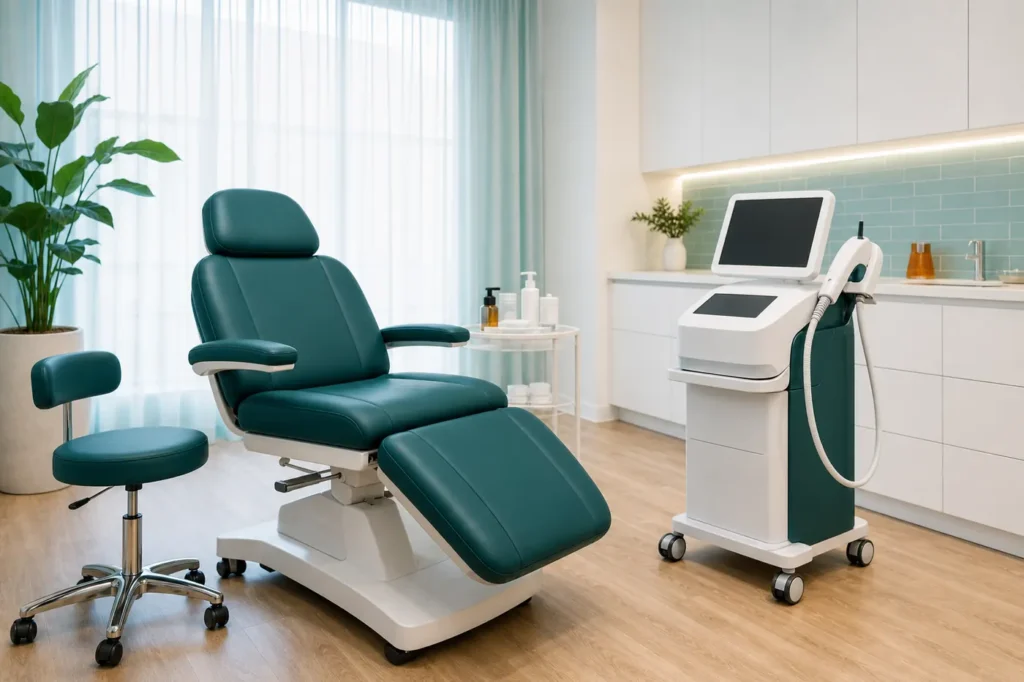
Podiatry clinic laser device beside an exam chair, used for laser treatment of toenail fungus

The Short Answer

Limited Evidence The Lunula Laser (Erchonia) is an in-office low-level laser device. It holds FDA 510(k) clearance K153164 for “temporary increase of clear nail in patients with onychomycosis” — a surrogate-endpoint clearance, not an approval to treat or eliminate the fungal infection. Clinical studies show improvements in clear nail appearance, but mycological cure rates (confirmed eradication of the fungus) are variable and generally lower than oral terbinafine. It is an in-office device only — consumer laser devices are not FDA-cleared for onychomycosis. Cost is typically $500–$2,000 for a full course. For confirmed infection, prescription oral terbinafine has the strongest evidence (~38% complete cure in the FDA label trials; Lamisil prescribing information).

At a Glance

Evidence Strength

StrongModerateLimited ✓Anecdotal

How we grade evidence

Time to Results

Wk 1–4After course12–18 mo
4 weekly in-office sessions, 12 min eachCleared endpoint: more clear nail, not fungal eradicationFull nail grow-out to judge the result

Key Facts

Status

FDA 510(k) cleared (K153164), clear-nail endpoint

Cost

$125–$250 per session; rarely insured

Where

In-office only; home lasers are not the same

Course

4 weekly sessions; 8 for severe cases

What Is the Lunula Laser?

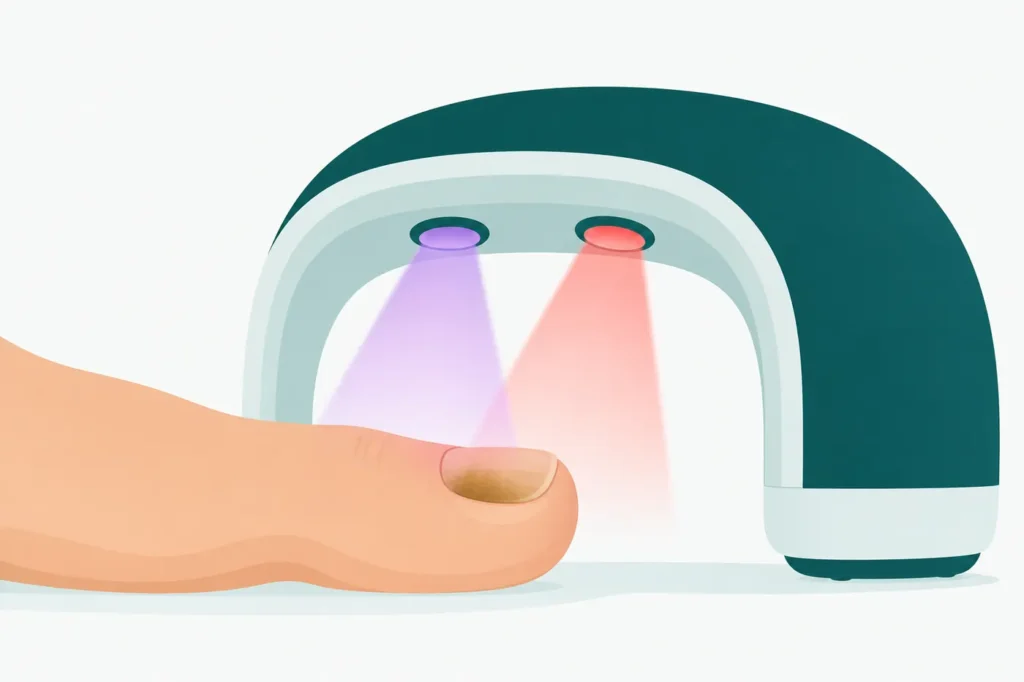
The Lunula Laser is a low-level (cold) laser device manufactured by Erchonia Corporation for in-office use by podiatrists, dermatologists, and other clinicians. It uses two wavelengths simultaneously — 405 nm (violet) and 635 nm (red) — to target nail and surrounding tissue. Unlike high-power Nd:YAG lasers that work by heat, the Lunula is a photobiomodulation device: it is designed to stimulate the body’s own immune and healing response rather than directly destroying fungal cells with thermal energy.

The device rotates around the nail during a session, delivering uniform low-level laser energy without pain or significant heat. A typical course is four weekly treatments of 12 minutes each. It is an in-office device — it is not sold to consumers and consumer laser gadgets marketed for nail fungus are not the same device.

Illustration of a low-level two-wavelength laser shining over a toenail during a Lunula session

FDA 510(k) Clearance K153164: What It Means

The Lunula Laser received 510(k) substantial-equivalence clearance from the FDA (clearance number K153164) for the following intended use: “temporary increase of clear nail in patients with onychomycosis.”

This is an important distinction:

  • What it means: The device demonstrated, in clinical testing, that it temporarily increases the amount of clear (unaffected) nail visible. This is a cosmetic or appearance endpoint.
  • What it does not mean: The device is not approved or cleared to eliminate the fungal infection, achieve mycological cure, or prevent recurrence. It is not approved as a treatment that clears the infection.
  • Not the same as FDA approval: 510(k) clearance is a marketing clearance based on substantial equivalence to a predicate device, not a full safety and efficacy review as required for new drugs or high-risk devices.

What the Studies Show

Limited Evidence

Several clinical studies have examined the Lunula Laser for onychomycosis. Key findings:

Limitations of the evidence: Most studies are small (<100 patients), use cosmetic endpoints rather than mycological cure (confirmed by lab testing), lack long-term follow-up, and have high risk of bias due to lack of blinding or sham control. The evidence is Limited compared to oral terbinafine, which has large multi-center RCT data with ~38% complete cure in the FDA label trials (Lamisil prescribing information).

Cost and What to Expect

The Lunula Laser is an in-office treatment. Most insurance plans do not cover laser treatment for onychomycosis, as it is generally classified as cosmetic.

Note on consumer home laser devices: Consumer laser gadgets sold online are not the Lunula Laser and are not FDA-cleared for onychomycosis. They operate on different principles and have far less clinical data. See our guide to home laser devices →

Lunula Laser vs Other Treatments

TreatmentEvidenceFDA statusCost
Lunula Laser (in-office)Limited Evidence510(k) cleared (cosmetic endpoint)$500–$2,000/course
Oral terbinafineStrong EvidenceFDA-approved~$10–$40/month
Jublia (topical)Moderate EvidenceFDA-approved$65–$830+
Nd:YAG laser (in-office)Limited Evidence510(k) cleared (cosmetic)$500–$1,500/course

See: Laser vs terbinafine — full comparison →

The Lunula Laser holds FDA 510(k) clearance (K153164) for “temporary increase of clear nail in patients with onychomycosis.” This is a clearance for a cosmetic/appearance endpoint — it is not an approval to treat or eliminate the fungal infection. No laser device is FDA-approved to cure onychomycosis as a disease.

Clinical studies show it can improve the appearance of the nail (increase clear nail area), but mycological cure (confirmed eradication of the fungus by lab testing) is not reliably achieved. The FDA clearance is specifically for a temporary increase in clear nail, not for eliminating the infection.

A standard course is typically four weekly sessions of 12 minutes each. Some providers recommend eight sessions for more severe onychomycosis. Results are assessed at 6 months, as nails grow slowly (12–18 months for full regrowth).

No. The Lunula Laser is an in-office medical device and is not sold to consumers. Consumer laser gadgets sold online are different devices with far less clinical evidence. None are FDA-cleared for treating the fungal infection.

Medical disclaimer: This page is informational only and not medical advice. Consult a licensed podiatrist or dermatologist for diagnosis and treatment options.

Sources: Erchonia Lunula Laser 510(k) clearance K153164 (FDA.gov, accessed Nov 2026); Zang K, Sullivan R, Shanks S. J Clin Aesthet Dermatol 2017;10(5):24–30 (PMC5479474); FDA Lamisil (terbinafine tablets) prescribing information, NDA 020539 (~38% complete cure at week 48); AAFP 2015 (prevalence 3–12%); Foot & Ankle Center of Washington. Laser nail fungus treatment pricing. footankle.com/best-laser-nail-fungus (accessed Nov 16, 2026); Balance Foot & Ankle. Toenail fungus laser treatment cost. michiganfootdoctors.com (accessed Nov 16, 2026).

Not sure which treatment fits your situation?

Use our finder for a personalised recommendation.