Home › Treatments › Laser vs Lamisil (Terbinafine)

Laser vs Lamisil (Terbinafine) for Toenail Fungus (2026)

Affiliate disclosure: Some links on this page are affiliate links. We may earn a commission at no extra cost to you. See our disclosure policy →
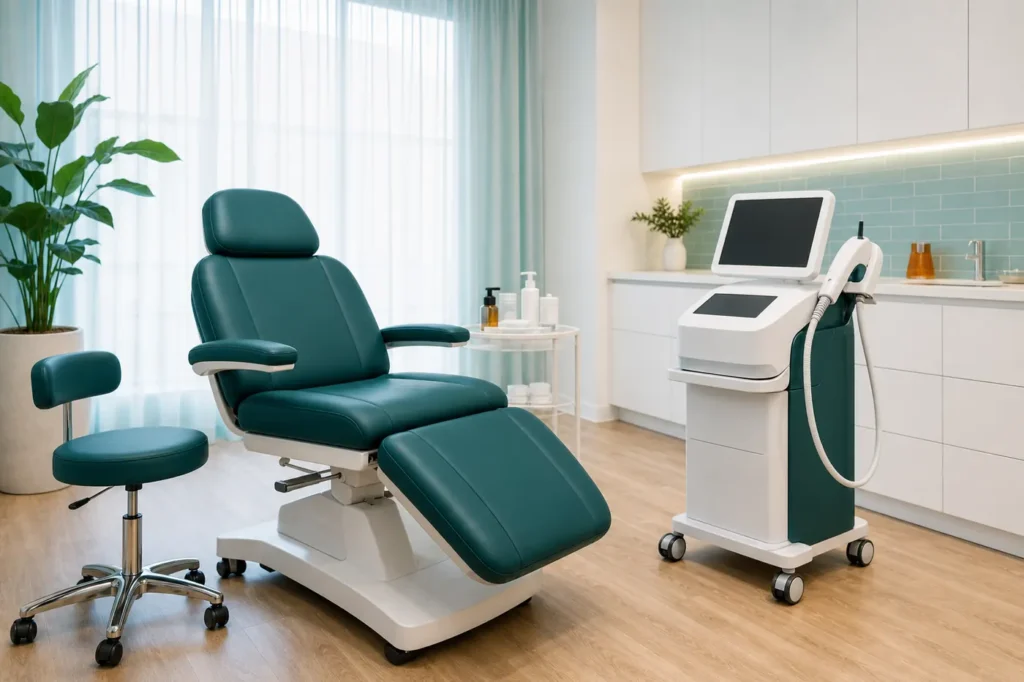
Podiatry clinic laser device beside an exam chair, used for laser treatment of toenail fungus

The Short Answer

Oral terbinafine (Lamisil) has significantly stronger clinical evidence for toenail fungus than laser treatment. Terbinafine achieves ~38% complete cure in the FDA label trials (Lamisil prescribing information) and is FDA-approved for onychomycosis. In-office laser treatment has Limited evidence — small RCTs with inconsistent outcomes. Home laser devices have Anecdotal evidence and are not FDA-cleared for onychomycosis. In-office laser typically costs ~$500–$1,500 per session and is rarely covered by insurance; generic terbinafine runs ~$10–$40/month. Laser has no systemic side effects, while terbinafine carries rare liver effects and drug interactions. Laser is not a substitute for prescription antifungal therapy for confirmed nail fungus.

At a Glance

Side by Side

Laser (in-office)Terbinafine (oral Rx)
Limited evidence; ~$500–$1,500 per session; rarely coveredStrong evidence; ~38% complete cure; ~$10–$40/month generic

Key Facts

Best evidence

Oral terbinafine

No pills or liver checks

In-office laser

Lowest cost

Generic terbinafine

Home laser devices

Anecdotal; not FDA-cleared for onychomycosis

Laser vs Terbinafine: Head-to-Head

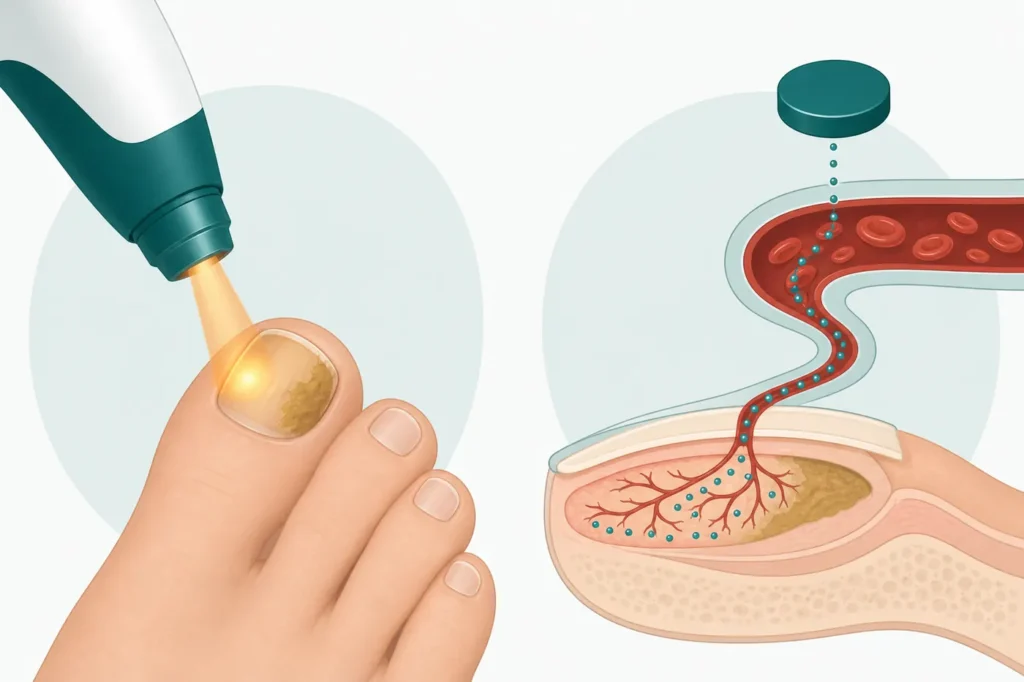
Illustration comparing laser light on the nail with oral terbinafine reaching the nail bed

Laser (In-Office)

VS

Terbinafine (Oral)

Verdict: For confirmed onychomycosis, oral terbinafine has the strongest evidence and is the most cost-effective option. Laser may be considered as an adjunct or for patients who cannot take oral antifungals. Full terbinafine guide →

About Home Laser Devices

Consumer home laser devices (460–470 nm blue + 905–930 nm near-infrared) are sold online as a drug-free option. No consumer home device is FDA-cleared for onychomycosis. The only FDA-cleared laser device for nail conditions is the Lunula (Erchonia), an in-office device cleared under 510(k) K153164 for “temporary increase of clear nail” — a substantially equivalent clearance, not an efficacy approval. Lunula is not a consumer device.

Home devices operate at significantly lower power than clinical lasers. No independent randomized controlled trial has confirmed efficacy for consumer home laser devices in onychomycosis. If you are curious about home devices, see our home laser guide →

Cost Comparison: Laser vs Terbinafine

OptionTypical costInsurance
In-office laser (ND:YAG or Lunula)~$500–$1,500 per session; 3–6 sessions commonRarely covered
Home laser device~$80–$300 device (one time)Not covered
Oral terbinafine (generic)~$10–$40/month with GoodRx; ~$120–$480 total courseOften covered

See our full toenail fungus treatment cost breakdown →

No — for most patients, oral terbinafine (Lamisil) has stronger clinical evidence. Terbinafine achieves ~38% complete cure in the FDA label trials (Lamisil prescribing information) and is FDA-approved for onychomycosis. In-office laser has Limited evidence (small RCTs with inconsistent results). Laser may be a reasonable adjunct or option for patients who cannot take oral antifungals, but it is not established as superior to terbinafine.

Clinical evidence is Limited and inconsistent. Some small RCTs report improvement in nail appearance; mycological cure (confirmed eradication of the fungus) is less consistently reported. Complete nail regrowth still takes 12–18 months even if the fungus is eliminated. No laser device is FDA-approved to cure onychomycosis.

Some clinicians use laser alongside oral antifungals as a combination approach, but this is not standard first-line treatment and the incremental benefit has not been established in large RCTs. If you are interested in combination therapy, discuss it with a dermatologist or podiatrist who performs laser treatments.

Sources: L.I.ON. / Sigurgeirsson et al., BMJ 1999;318:1031; Gupta AK, Versteeg SG, J Eur Acad Dermatol Venereol 2017;31(7):1111–8 (critical review of laser improvement rates); Erchonia Lunula 510(k) K153164 (FDA, Jun 2016); AAFP 2015 prevalence 3–12%.

Find the right treatment for your case.

Use our finder for a personalised recommendation.