Home › How Is Toenail Fungus Diagnosed
How Is Toenail Fungus Diagnosed? (KOH, Culture, PAS, PCR Explained)
By Best Toenail Fungus Treatments · Reviewed 15 Nov 2026 · 11 min read
Home › How Is Toenail Fungus Diagnosed
By Best Toenail Fungus Treatments · Reviewed 15 Nov 2026 · 11 min read
Toenail fungus cannot be reliably diagnosed by looking at the nail. Nail psoriasis, nail trauma, lichen planus, and bacterial infection can all look identical to onychomycosis. Studies show that clinical diagnosis alone is wrong in roughly 50% of cases (Elewski BE, Clin Microbiol Rev 1998). Four main lab tests can confirm onychomycosis and identify the pathogen: KOH microscopy, fungal culture, PAS histopathology, and PCR. The choice depends on how quickly you need results, what your clinician has access to, and whether species identification matters for treatment decisions.
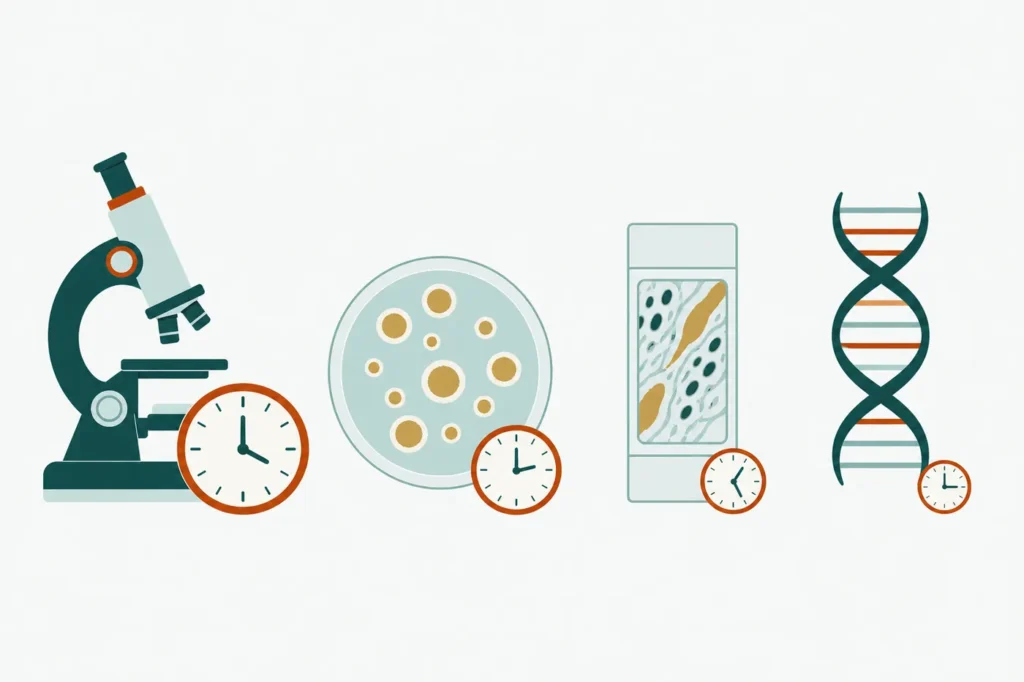
Time to Result by Test
| KOH | PCR | PAS | Culture |
|---|---|---|---|
| Same day; ~65–80% sensitivity | 1–5 days; ~90–95%, names species | 1–2 weeks; ~80–95% | 2–6 weeks; names species |
Key Facts
Diagnosis by look alone
Wrong in roughly 50% of cases
Fastest test
KOH microscopy (same day)
Most accurate
PCR (~90–95%)
Names the species
Fungal culture or PCR
Clinical appearance of nails is not reliable for diagnosis. The same nail changes — discolouration, thickening, separation — are caused by:
Prescribing a 12-week course of oral terbinafine for psoriasis does nothing for the nail and exposes the patient to side effects unnecessarily. Lab confirmation also matters for distinguishing Trichophyton (dermatophyte) from Candida — because terbinafine does not work for Candida. See Candida nail infection →
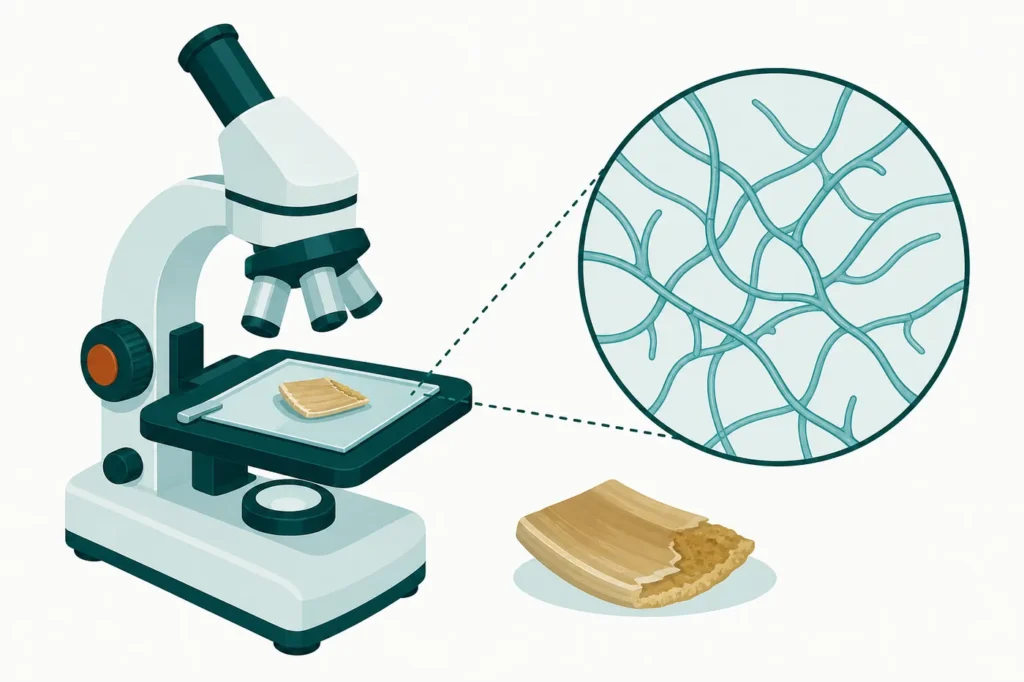
Sampling tip: The best samples come from nail clippings and subungual debris from the most proximal affected area of the nail, not the distal free edge (where contamination with environmental fungi is higher). Poor sampling is the most common cause of false-negative KOH results.
| Test | Time to result | Sensitivity | Species ID? | Notes |
|---|---|---|---|---|
| KOH microscopy | Hours (same day) | ~65–80% | No | Rapid; common first step |
| Fungal culture | 2–6 weeks | ~25–80% | Yes | Gold standard for species ID |
| PAS histopathology | 1–2 weeks | ~80–95% | No | High sensitivity; needs pathology lab |
| PCR | 1–5 days | ~90–95% | Yes | Most accurate; not universally available |
Sensitivity estimates from Velasquez-Agudelo & Cardona-Arias, BMC Infect Dis 2017 (systematic review of diagnostic methods).
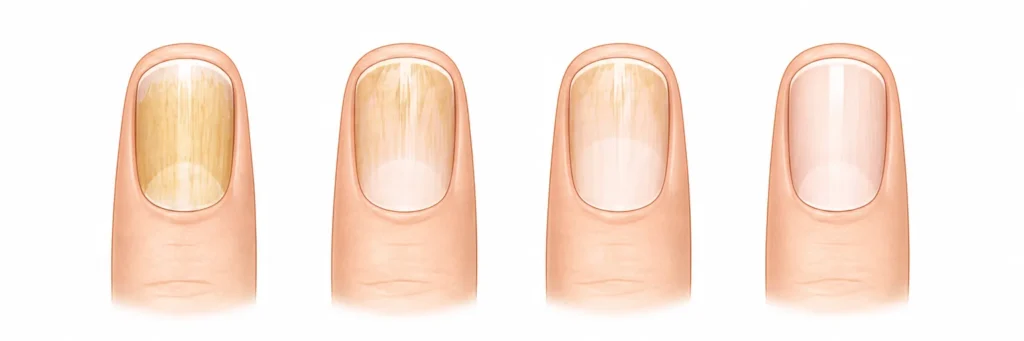
No. Clinical examination alone is wrong in approximately 50% of cases (Elewski BE, Clin Microbiol Rev 1998). Many nail conditions look like onychomycosis: psoriasis, trauma, lichen planus, and others. Lab testing is needed to confirm the diagnosis before prescribing antifungal treatment.
No single test is perfect. KOH microscopy is the fastest (same-day) and most widely available. PAS histopathology has the highest sensitivity of the routine tests (~80–95%). Culture provides species identification. PCR has the best combination of sensitivity, speed, and species identification but is not universally available. Many clinicians combine KOH with culture, or use PAS when KOH and culture are negative.
It depends on the test: KOH microscopy gives results the same day (minutes to hours). PAS histopathology takes 1–2 weeks. PCR takes 1–5 days. Fungal culture takes the longest — 2–6 weeks — because dermatophytes grow slowly in the lab.
No validated at-home nail fungus test kit exists as of 2026 that provides accurate results. The tests described on this page require a clinical sample collected by a clinician and processing by a clinical laboratory. If you suspect onychomycosis, see a clinician for a proper sample collection.
Medical disclaimer: This page is informational only and not medical advice. Consult a licensed clinician for diagnosis and treatment of nail conditions.
Sources: Velasquez-Agudelo V, Cardona-Arias JA. BMC Infect Dis 2017;17:166 (systematic review of diagnostic methods; sensitivity/specificity estimates); Elewski BE. Clin Microbiol Rev 1998;11(3):415–429 (clinical diagnosis accuracy); Ferrari J. Am Fam Physician 2015;92(2):132–133 (AAFP prevalence 3–12%).
Use our finder for a personalised recommendation based on severity and health status.