Home › Treatments › Terbinafine vs Itraconazole
Terbinafine vs Itraconazole for Toenail Fungus (2026)
By Best Toenail Fungus Treatments · Reviewed 15 Nov 2026 · 11 min read

Home › Treatments › Terbinafine vs Itraconazole
By Best Toenail Fungus Treatments · Reviewed 15 Nov 2026 · 11 min read
Both terbinafine and itraconazole are oral prescription antifungals effective against toenail fungus. Terbinafine is the preferred first-line drug in U.S. guidelines: ~46% complete cure at 72 weeks in the L.I.ON trial (Evans & Sigurgeirsson, BMJ 1999). Itraconazole pulse dosing is an alternative (~23% complete cure in the same trial) but carries significantly more drug interactions due to CYP3A4 inhibition. Itraconazole is typically reserved for cases where terbinafine is not suitable, or for non-dermatophyte or Candida nail infections. Both need a prescription from a doctor or podiatrist.
Read our full terbinafine guide, or see the options you can buy without a prescription.
Evidence Strength (both drugs)
Strong ✓ModerateLimitedAnecdotal
Side by Side
Key Facts
First-line in guidelines
Terbinafine
Candida or molds
Itraconazole
Cost per month
Terbinafine ~$10–$40; itraconazole ~$30–$80
Heart failure
Avoid itraconazole
How the two prescription medicines compare:
Terbinafine (oral)
Itraconazole (oral)
1 Evans EGV, Sigurgeirsson B (L.I.ON). BMJ 1999;318(7190):1031–5. 2 FDA Sporanox (itraconazole) prescribing information, NDA 020083 (200 mg/day × 12 weeks). Prices: GoodRx Nov 2026.
What guidelines say: terbinafine is first-line for most patients. Doctors use itraconazole when the infection involves Candida, non-dermatophyte molds, or when terbinafine is contraindicated. Drug interactions need a careful review first. Full terbinafine guide →
Drug interactions are the most clinically significant difference between these two drugs.
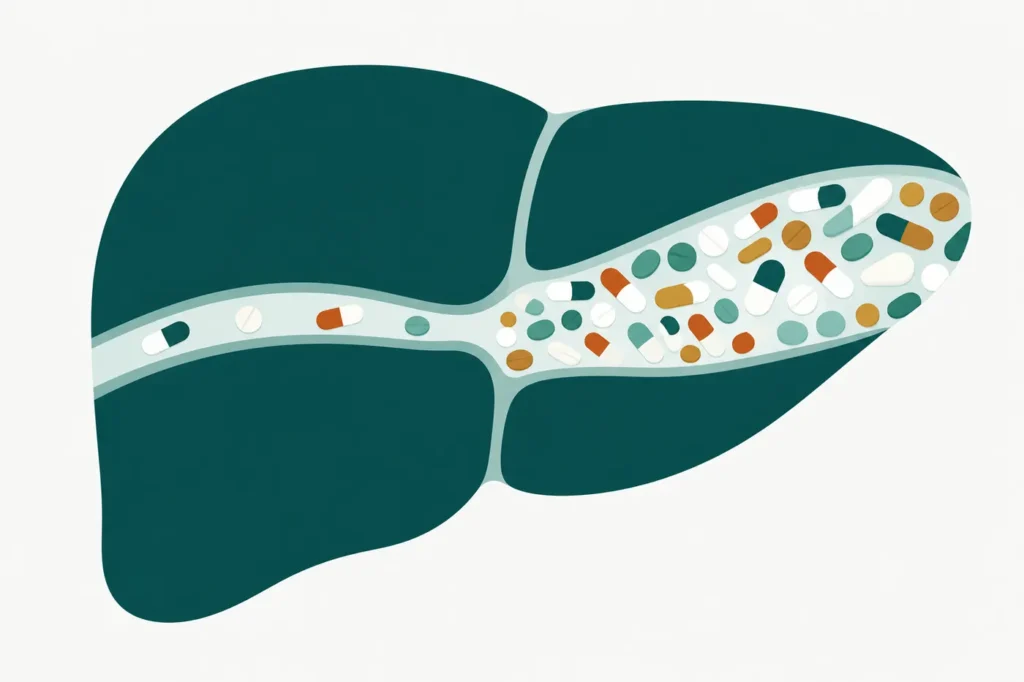
Itraconazole strongly inhibits CYP3A4 (and CYP2C9 to a lesser degree). This means it can raise blood levels of many co-administered drugs to potentially dangerous levels. The FDA has issued contraindications for use with certain statins (lovastatin, simvastatin), some antiarrhythmics (quinidine, dofetilide), ergot alkaloids, and several benzodiazepines. Patients taking multiple medications should have all drug interactions reviewed before starting itraconazole.
Terbinafine inhibits CYP2D6, which metabolizes fewer drugs. Key interactions include warfarin (terbinafine can increase anticoagulant effect), cyclosporine (levels may decrease), and certain antidepressants (tricyclics, SSRIs) where CYP2D6 is involved. Still requires a drug review, but the interaction burden is lower than itraconazole.
Always review the full prescribing information and your patient’s medication list with a clinician or pharmacist before starting either drug.
Which drug doctors usually use in each situation, and why:
Neither terbinafine nor itraconazole is available over the counter for onychomycosis. You need a clinician visit, lab confirmation of the fungal species (which guides drug choice), and baseline liver function tests if indicated. Self-treating nail fungus with OTC products is unlikely to clear an established infection. If you need a prescription, ask your primary care physician or see a dermatologist or podiatrist.
We can’t prescribe or sell prescription medicine, and we don’t rank one over another; a doctor or podiatrist decides that with you. These are the best options we found that you can buy without a prescription. None of them is FDA-approved to cure nail fungus: they suit mild or early cases, skin fungus around the nail, or making a thick nail look and feel better while you wait for a diagnosis. More choices: our best over-the-counter toenail fungus treatments guide.
Product image
Undecylenic acid 25% liquid, brushed onto the nail and the skin around it
Anecdotal Evidence
Evidence note: Anecdotal as a product (no trial of Fungi-Nail itself); its active, undecylenic acid, has Limited evidence and is approved for skin fungus, not nails.
Best for
Mild or early nail fungus
Price & rating (Nov 2026)
$9.99 · 4.1/5 (16,475)
Product image
Over-the-counter terbinafine 1% cream (the same drug as the pills, as a skin cream)
Limited Evidence
Evidence note: Limited evidence. Labelled for athlete’s foot on the skin, not nails; treating the skin helps stop spread to the nails but will not clear fungus inside the nail.
Best for
Athlete’s foot around the nail
Price & rating (Nov 2026)
$14.99 · 4.6/5 (4,148)
Product image
Urea and lactic acid nail gel that softens and smooths a discoloured, thick nail
Anecdotal Evidence
Evidence note: Anecdotal as a product (urea: Limited). Cosmetic: improves how the nail looks; it has no antifungal ingredient.
Best for
Better-looking nails while treating
Price & rating (Nov 2026)
$19.10 · 4.2/5 (67,759)
Prices and ratings were checked on Amazon in November 2026 and change often; check the current listing. These are affiliate links (we may earn a small commission). No product here is FDA-approved to treat toenail fungus.
For most patients with confirmed dermatophyte onychomycosis, terbinafine is preferred — it has a ~46% complete cure rate at 72 weeks in the L.I.ON trial (Evans & Sigurgeirsson, BMJ 1999) and fewer drug interactions than itraconazole. Itraconazole is used when the fungus is Candida, a non-dermatophyte mold, or when terbinafine cannot be used. The choice should be guided by lab identification of the organism and a full medication review.
Combining them is not standard practice and not supported by clinical guidelines. Using both increases drug interaction risk and side effect burden without established evidence of added benefit. Never combine prescription antifungals without direct clinician guidance.
Itraconazole pulse dosing (200 mg twice daily for 7 days, repeated monthly for 3 cycles) takes about 12–18 months for the nail to grow in clear. The drug course itself is shorter, but nail regrowth takes that long regardless of which drug is used. In the FDA label trials, continuous dosing (200 mg daily × 12 weeks) gave ~14% complete cure; in the L.I.ON trial, pulse dosing gave ~23% complete cure at week 72.
If terbinafine fails, options include: switching to itraconazole (if lab confirms the organism is susceptible), adding a topical prescription antifungal (Jublia, Penlac), or reassessing the diagnosis (non-fungal nail conditions can mimic onychomycosis). A clinician may also check whether the drug was absorbed properly — terbinafine requires fatty food intake for optimal absorption.
Sources: Evans EGV, Sigurgeirsson B (L.I.ON). BMJ 1999;318(7190):1031–5; Havu V et al., Br J Dermatol 2000;142:97–102; Hainer BL. Dermatophyte infections. Am Fam Physician 2003;67(1):101–8; FDA prescribing information: Sporanox (itraconazole), Lamisil (terbinafine).
Use our finder for a personalised recommendation.