Home › Home Remedies › Foot Soaks for Toenail Fungus

Foot Soaks for Toenail Fungus: What Works, What Doesn't, and How to Use Them

Medical Disclosure: For informational purposes only. Not a substitute for professional medical advice, diagnosis, or treatment.
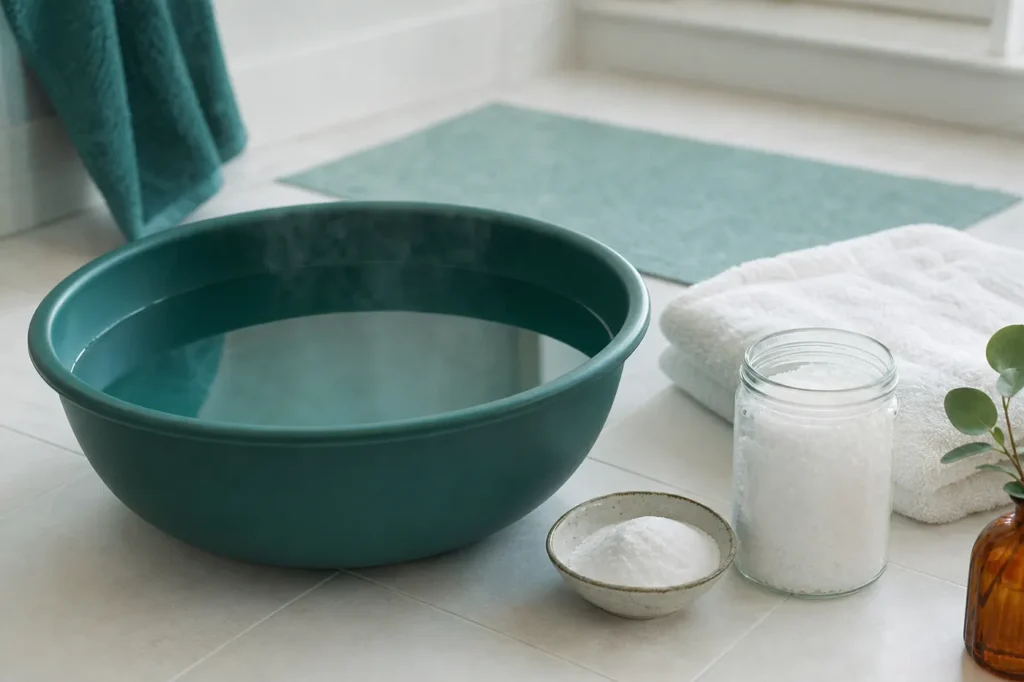
A basin of warm water with a towel, Epsom salt and baking soda ready for a toenail fungus foot soak

The Short Answer

Foot soaks are a popular home approach to toenail fungus. They are inexpensive, low-risk, and can soften thickened nails to improve topical antifungal absorption. However, they are not a proven standalone cure for established nail infections — clinical evidence for soaks as monotherapy is limited. Used consistently alongside medically recommended treatments, they may help; used alone for a moderate or severe infection, results are unlikely to be sufficient.

At a Glance

Evidence Strength (soaks alone)

StrongModerateLimited ✓Anecdotal

How we grade evidence

A Soak Routine

SoakDryApply3 months
15–20 min in warm (not hot) waterDry fully, especially between the toesTopical antifungal while the nail is hydratedNo improvement? See a doctor

Key Facts

Evidence

Lab (in-vitro) data; no human nail trials

Best use

Softening the nail before a topical

Consistency

Daily soaks of 15–20 minutes

Not for everyone

Diabetes or PVD: ask a doctor first

Moderate evidence for soaks as an adjunct to topical antifungals.

Why Foot Soaks May Help (and Their Limits)

The human toenail is a dense keratinous plate approximately 0.5–0.75 mm thick. Topical antifungals must penetrate this barrier to reach the nail bed where the fungus lives. Soaking softens the nail through hydration, temporarily increasing its permeability. A 20-minute soak raises nail water content, which may improve the absorption of subsequently applied topical antifungals like ciclopirox or efinaconazole.

Beyond mechanical softening, some soaking solutions contain compounds with demonstrated antifungal properties in laboratory settings. The challenge is that lab (in-vitro) results do not automatically translate to clinical effectiveness against a nail infection — the nail plate creates a barrier that substantially reduces the concentration of active compounds reaching the nail bed.

Limited Evidence for soaks as standalone treatment. Moderate Evidence for soaks as an adjunct to topical antifungals.

Four Evidence-Referenced Soak Recipes

1. Apple Cider Vinegar Soak

Recipe: Mix 1 part apple cider vinegar (5% acidity) with 2 parts warm water. Soak feet for 15–20 minutes, then dry thoroughly — especially between the toes. Use daily.

How it may work: Acetic acid (the active compound in vinegar) creates an acidic environment that inhibits fungal growth. A 2018 study demonstrated that acetic acid at concentrations achievable with diluted vinegar inhibited Candida biofilm formation in vitro. Source: Yagnik D, Serafin V. Sci Rep. 2018. PMID: 29379012.

Limitation: No controlled human trials specifically for ACV against toenail onychomycosis. The vinegar smell dissipates after thorough rinsing and drying.

2. Hydrogen Peroxide Soak

Recipe: Add 1/4 cup 3% hydrogen peroxide (standard drugstore concentration) to a basin of warm water (approximately 1 gallon). Soak for 10–15 minutes daily. Do not use concentrations above 3% — higher concentrations can damage skin.

How it may work: Hydrogen peroxide releases oxygen on contact with tissue, creating an environment that is hostile to anaerobic organisms and may disrupt fungal cell membranes. Its antifungal properties are supported by in-vitro studies, though clinical trial data for nail fungus is limited.

Caution: Avoid if you have open skin wounds or abrasions on the feet. Prolonged daily use can dry the skin — apply a fragrance-free moisturizer after soaking and drying.

3. Epsom Salt (Magnesium Sulfate) Soak

Recipe: Dissolve 1 cup of Epsom salt in a gallon of warm water. Soak for 15–20 minutes, then dry thoroughly. Use 3–4 times weekly.

How it may work: Epsom salt softens the nail plate, reducing brittleness and making it easier to file or trim infected nail material. High osmotic concentration may also draw fluid from fungal cells (osmotic stress). Some users find it reduces odor and debris under the nail. Direct antifungal evidence for Epsom salt in onychomycosis specifically is limited — its primary benefit is mechanical softening and comfort.

4. Baking Soda Soak

Recipe: Dissolve 2 tablespoons of baking soda (sodium bicarbonate) in a basin of warm water. Soak for 15–20 minutes, dry completely.

How it may work: Baking soda raises the pH of the soak solution, creating alkaline conditions. While fungi generally prefer slightly acidic environments, the degree of pH shift achievable with a baking soda soak is modest and its direct inhibitory effect on nail dermatophytes in clinical settings is not well-established. Its main benefit is as a deodorizing soak that relieves the odor associated with fungal debris.

Combination approach: Some practitioners suggest alternating ACV and baking soda soaks (acidic one day, alkaline the next) but this combination has not been studied in clinical trials.

How to Get the Most From a Foot Soak

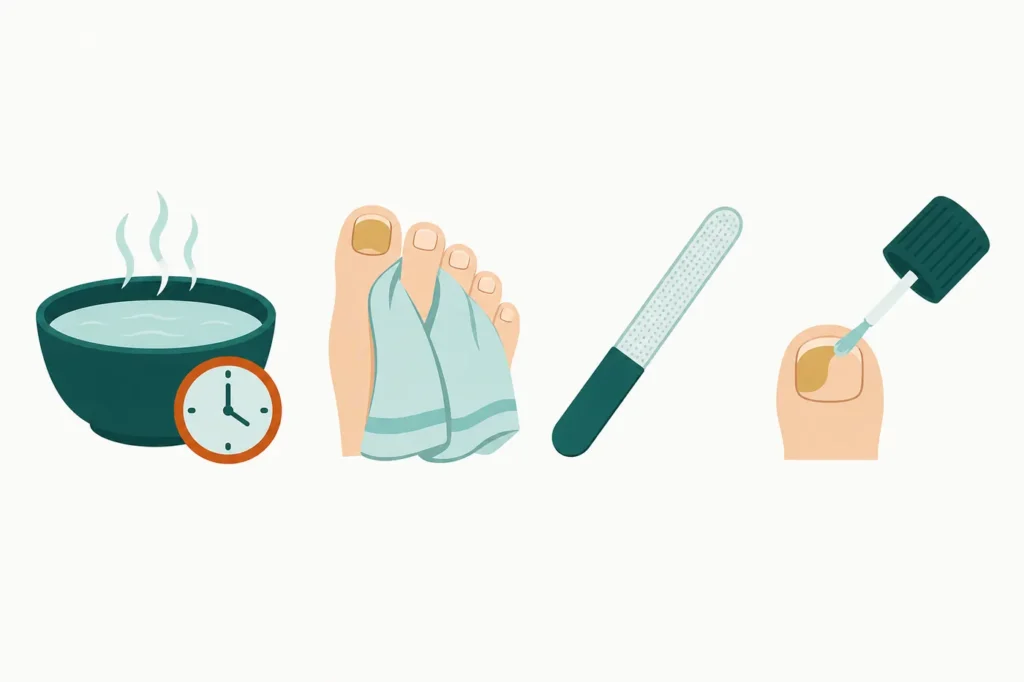
Icon steps for a foot soak routine: soak, dry, file the nail, then apply a topical antifungal

When to Stop Soaking and See a Doctor

Consult a healthcare provider if:

Oral prescription antifungals (terbinafine, itraconazole) achieve 70–80% mycological cure rates for established toenail infections — far higher than soaks or OTC topicals alone for moderate or severe cases. Foot soaks are best viewed as a supportive measure, not a replacement for proven treatment.

Frequently Asked Questions

No controlled timeline data exists for soaks specifically. If used daily as a supplement to topical antifungals, noticeable changes in the nail appear only as new, healthy nail grows out — toenails grow approximately 1–2 mm per month, so full regrowth takes 12–18 months. If you see no change in nail color or texture after 2–3 months, speak with a doctor about prescription options.

Tea tree oil (melaleuca oil) has the most evidence of any essential oil for antifungal activity — a concentration of 25–50% tea tree oil solution was shown to inhibit nail fungus in a randomized clinical trial. Adding a few drops to a soak dilutes the concentration substantially below therapeutic levels. If you want to use tea tree oil, apply it directly to the nail after soaking and drying rather than adding it to the soak water. Source: Buck DS, Nidorf DM. J Fam Pract. 1994. PMID: 8195735.

Yes, but be cautious. Onycholysis (nail separation) means the space under the nail can harbor bacteria. Soaking is acceptable; ensure the area dries completely afterward. If the exposed nail bed is red, warm, or producing discharge, see a healthcare provider — bacterial secondary infection (paronychia) requires antibiotic treatment.

Warm — 37–40°C (98–104°F), roughly body temperature to slightly above. Hotter water does not improve antifungal activity and risks scalding, particularly for people with diabetic neuropathy who have reduced foot sensation. A simple test: the water should feel warm and comfortable, not uncomfortable, on your wrist.

Plain warm water soaks are generally considered safe. The safety of ACV or hydrogen peroxide soaks during pregnancy has not been specifically studied. Consult your OB/GYN before using any topical antifungal product during pregnancy, as many are not recommended and alternatives may be preferred.