Home › Best Toenail Fungus Treatments › Best Treatment for Diabetics

Best Toenail Fungus Treatment for Diabetics (2026): Evidence-Graded Picks

Affiliate disclosure: Some links on this page are affiliate links. If you buy through them we may earn a commission at no extra cost to you. See our disclosure policy →

Podiatry clinic room with a glucose meter and diabetic socks, for diabetic toenail fungus care

The Short Answer

People with diabetes face a 2–3× higher risk of onychomycosis due to impaired circulation and neuropathy, and reduced blood flow and nerve damage can let an infection advance silently until it is hard to treat. Prescription oral terbinafine has the strongest clinical evidence (Strong grade) but requires clinician supervision and blood glucose monitoring. OTC topicals are safer to start but carry Limited evidence for nail penetration. See a podiatrist before starting any treatment.

At a Glance

Top Pick Evidence

Strong ✓ModerateLimitedAnecdotal

How we grade evidence

Key Facts

Top pick

Oral terbinafine, clinician-supervised

Evidence

~38% complete cure (FDA label)

Price range

Under $15 OTC to ~$40/mo Rx

Options compared

3 picks, each graded

Best Toenail Fungus Treatment for Diabetics: Our Top Picks at a Glance

Diabetes changes the risk calculation for onychomycosis treatment. The table below summarises our top picks with evidence grades and diabetes-specific notes. Detailed reviews follow in the next section.

Best Toenail Fungus Treatment for Diabetics: Top Picks Summary
Terbinafine (oral Rx)Strong EvidenceHighest cure rates; clinician supervision required~$10–$40/mo
Undecylenic acid OTC (Fungi-Nail)Limited EvidenceSafer OTC start; mild cases onlyUnder $15
Kerasal Fungal Nail RenewalLimited EvidenceCosmetic improvement only; use alongside antifungal~$12–$24
Diabetics: Always see a podiatrist or clinician before starting any treatment. Never self-trim or cut into the nail bed.

How We Graded Each Toenail Fungus Treatment for Diabetics Pick

Every pick is graded on three factors:

  1. Clinical evidence: randomised controlled trials and systematic reviews, not in-vitro or anecdotal reports.
  2. Diabetes-specific suitability: safety profile with common diabetic medications, interaction risk, and whether the product requires podiatrist supervision.
  3. Realistic access: whether a diabetic patient can realistically obtain and use the treatment safely.

Grade scale: Strong Evidence = multiple high-quality RCTs  |  Moderate Evidence = at least one RCT or strong cohort  |  Limited Evidence = small studies or expert opinion  |  Anecdotal Evidence = no controlled evidence

Read our full grading methodology →

Our Toenail Fungus Treatment for Diabetics Picks, Reviewed One by One

Product image

Terbinafine (Lamisil)

Oral prescription antifungal — Best overall for diabetics

Strong Evidence

Oral terbinafine achieves approximately 38% complete cure in the FDA label trials (Lamisil prescribing information) — the highest rate of any available treatment. For diabetics, this requires a clinician visit: pre-treatment liver function and baseline blood glucose monitoring are standard. Terbinafine can interact with sulfonylurea diabetes medications; your clinician will check this before prescribing. Generic terbinafine is widely available from $10–$40 per month.

Pros

Cons

Best for

Moderate–severe onychomycosis in diabetics under clinician supervision

Active ingredient

Terbinafine

Evidence

Strong Evidence

Est. price

~$10–$40/month (generic)

Product image

Fungi-Nail Anti-Fungal

OTC undecylenic acid topical — Safest OTC option

Limited Evidence

Undecylenic acid (25%) is an over-the-counter antifungal with FDA approval for topical skin fungal infections. Evidence for penetrating the nail plate is limited, making it most appropriate for mild, early-stage cases — or while awaiting a podiatrist appointment. No systemic absorption means no interaction with diabetes medications, which is a meaningful advantage. No OTC product is FDA-approved to treat onychomycosis.

Pros

Cons

Best for

Mild, early-stage infection; OTC-first preference while awaiting podiatrist

Active ingredient

Undecylenic acid 25%

Evidence

Limited Evidence

Est. price

Under $15

Product image

Kerasal Fungal Nail Renewal

OTC cosmetic nail softener — Appearance management

Limited Evidence

Kerasal contains urea and lactic acid, which soften and exfoliate discoloured, thickened nails. It is not a clinical antifungal and does not resolve the underlying infection. For diabetics with significantly thickened nails, it can improve cosmetic appearance and make professional nail care easier. Use only alongside a real antifungal, and only after confirming skin integrity with your clinician — urea products should not be applied over cracked skin.

Pros

Cons

Best for

Discoloured, thickened nails alongside real antifungal treatment

Active ingredient

Urea + lactic acid

Evidence

Limited Evidence

Est. price

~$12–$24

Best Toenail Fungus Treatment for Diabetics Comparison Table

TreatmentEvidenceDiabetes safety noteTime to clear nailEst. cost
Terbinafine (oral Rx)Strong EvidenceClinician supervision required; check sulfonylurea interaction12–18 months (nail growth)~$10–$40/mo
Itraconazole (oral Rx)Moderate EvidenceRequires clinician supervision; drug interactions12–18 monthsVaries (Rx)
Efinaconazole (Jublia, Rx topical)Moderate EvidenceTopical; lower systemic risk; Rx required48 weeks$65–$830+
Undecylenic acid OTC (Fungi-Nail)Limited EvidenceNo systemic absorption; no drug interactions6–12+ monthsUnder $15
Clotrimazole/miconazole OTCLimited EvidenceTopical; no systemic absorption for nail productsUnproven for nails$5–$15
Kerasal (cosmetic, urea)Limited EvidenceAvoid on cracked/broken skin; cosmetic use onlyCosmetic improvement 2–8 weeks~$12–$24
Oral supplementsAnecdotal EvidenceUnknown interactions; no clinical trial data for nailsNo proven timeline$40–$80/mo

No OTC product is FDA-approved to treat onychomycosis. Prescription options require a clinician visit; for diabetics this visit also allows comprehensive foot examination and nail debridement if needed. Prices as of November 2026.

Which Toenail Fungus Treatment for Diabetics Fits Your Case

Use this decision guide alongside your healthcare provider’s advice:

  • Mild infection (1–2 nails, surface discoloration only): Start with an OTC topical (undecylenic acid) while booking a podiatrist appointment. Avoid home nail cutting — ask your clinician to manage nail thickness.
  • Moderate infection (thick, yellow, involving more than 2 nails): Prescription oral terbinafine is the strongest option. Requires a clinician visit, pre-treatment bloodwork, and monitoring for drug interactions.
  • Severe infection (crumbling, painful, spreading, involving most nails): Podiatrist visit urgently. Severe infection in a diabetic foot is a medical concern, not a self-treatment scenario.
  • Cannot take oral antifungals (liver disease, drug interactions): Prescription topical efinaconazole (Jublia) or ciclopirox lacquer. Discuss with your clinician.

For all severity levels: do not attempt to trim, file or cut deep into thickened nails yourself. Neuropathy means you may not feel cuts that become infected. This is a podiatry task.

Toenail Fungus Treatment Safety Rules for People With Diabetes (Podiatrist First)

Icon checklist of daily foot-care safety steps for people with diabetes and toenail fungus

Podiatrist First — Non-Negotiable

All guidance on this page is informational only. For people with diabetes, toenail fungus is a podiatry-first matter, not a pharmacy-aisle decision. Uncontrolled foot infections in diabetics can progress to serious complications. Book a podiatry appointment before starting treatment.

Diabetes creates three specific complications that change the standard treatment approach:

  1. Neuropathy (nerve damage): Reduced sensation in the feet means pain — the normal warning signal that an infection is advancing — may be absent or greatly reduced. Regular visual inspection of nails is essential.
  2. Poor circulation (peripheral arterial disease): Reduced blood flow slows wound healing. A minor cut or scrape near a fungal nail can become a serious problem quickly. This is why self-trimming thick nails at home is not recommended.
  3. Immune system effects: Elevated blood glucose impairs immune response, allowing fungal infections to progress more rapidly and making treatment harder.

Key safety rules:

  • Book a podiatrist or certified diabetes educator before starting any antifungal.
  • Tell your clinician about all current medications — especially sulfonylureas, as terbinafine can interact with these.
  • Do not cut, file, or probe deeply into thickened nails yourself.
  • Inspect feet and nails daily for new discoloration, spreading, or odor.
  • Wear moisture-wicking socks and well-fitting footwear to reduce reinfection risk.

Active Ingredients That Matter in a Toenail Fungus Treatment for Diabetics (Terbinafine, Undecylenic Acid, Tolnaftate, Tea Tree Oil)

Understanding what each active ingredient does helps you have a more informed conversation with your clinician.

Terbinafine Strong Evidence

An allylamine antifungal that inhibits ergosterol synthesis in fungal cell membranes. Oral terbinafine accumulates in the nail plate for months after the treatment course ends. Complete cure approximately 38% in the FDA label trials (Lamisil prescribing information). Most potent option available; requires prescription and monitoring.

Undecylenic acid Limited Evidence

A fatty acid antifungal, FDA-approved for topical skin infections. Limited evidence for nail penetration. No systemic absorption and no known interactions with diabetes medications. Appropriate for mild surface-level cases as a first OTC option.

Tolnaftate Limited Evidence

A synthetic antifungal effective for athlete’s foot (tinea pedis). Limited evidence for nail-plate penetration. Useful for preventing spread to surrounding skin while treating the nail with a stronger option.

Efinaconazole (Jublia) Moderate Evidence

A prescription topical triazole with better nail-plate penetration than older lacquers. Complete cure rate 15–18% (Elewski et al., JAAD 2013). Topical application means lower systemic exposure compared to oral antifungals — a significant advantage for diabetics who cannot take oral options.

Tea tree oil Limited Evidence

Some in-vitro antifungal activity. Very limited clinical trial evidence for nail fungus. Not recommended as sole treatment. May irritate sensitive skin in some diabetics.


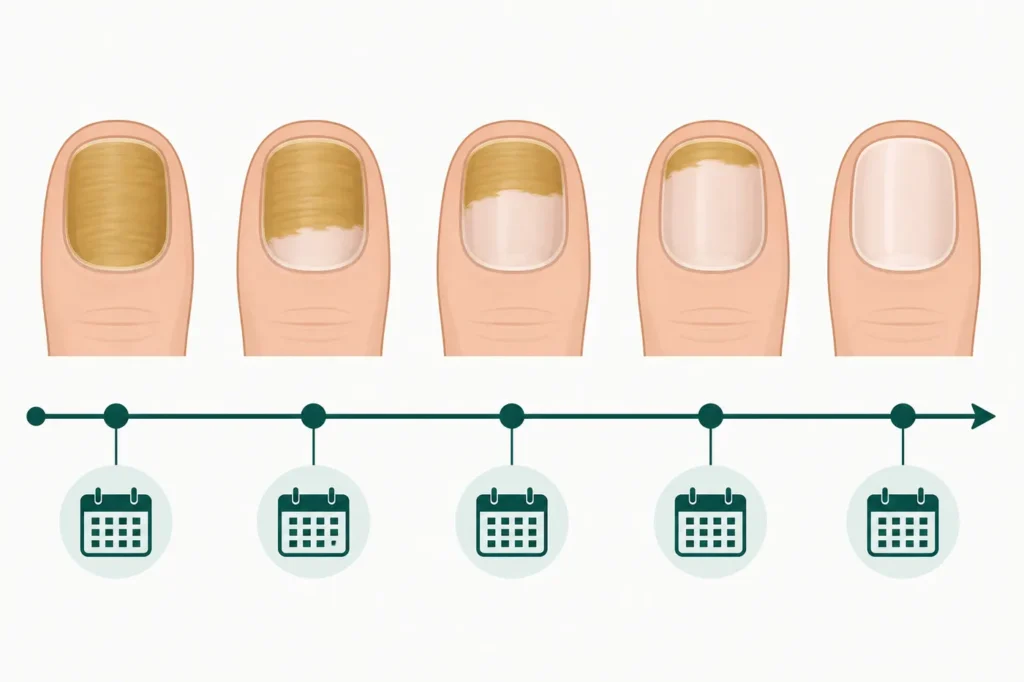
How Long a Toenail Fungus Treatment for Diabetics Takes to Work (Nail Growth Timeline)

No treatment clears toenail fungus overnight. The main variable is not how fast the medication works — it is how long a full toenail takes to grow in. For most adults, a big toenail takes 12 to 18 months to grow from the matrix to the tip. Treatment ends the active infection, but the nail will not look clear until new, healthy nail has grown all the way through.

For people with diabetes, healing may be slightly slower due to reduced circulation. The treatment timeline does not shorten with more product applied; consistency over months is what determines outcome.

  • Oral terbinafine (12 weeks): The active treatment course is 12 weeks. Full nail clearance takes 12–18 months from the start of treatment.
  • Topical efinaconazole (Jublia, 48 weeks): Daily topical for 48 weeks. Visible improvement typically appears at 24–36 weeks.
  • OTC topicals: No well-defined clinical timeline. Consistent daily application for at least 6–12 months is typically required for any visible change in mild cases.
Timeline illustration of a toenail growing out clear over 12 to 18 months

Toenail Fungus Treatment for Diabetics Side Effects and Safety Checks

Terbinafine: Most common side effects are gastrointestinal (nausea, diarrhoea) and rash. Rare but serious: hepatotoxicity (liver damage); pre-treatment liver function testing is standard. Drug interaction with warfarin and some antidepressants (SSRIs). For diabetics specifically: check interaction with any current sulfonylurea medications with your prescribing clinician before starting.

Itraconazole: More drug interactions than terbinafine; cardiac effects in some patients. Generally second-line for onychomycosis.

Efinaconazole (Jublia, topical): Local reactions (ingrown nail, application site dermatitis) in a small percentage of patients. Systemic absorption is very low.

OTC topicals (undecylenic acid, tolnaftate): Generally well tolerated. Local irritation is possible. No systemic effects.

Urea products (Kerasal): Avoid on broken or cracked skin, which is a particular risk in diabetics with peripheral neuropathy. Apply only to intact nail and healthy surrounding skin.

When a Prescription Beats Any Toenail Fungus Treatment for Diabetics

OTC products are Limited-evidence options suitable only for the mildest early cases. In most scenarios involving a person with diabetes and established onychomycosis, prescription options have meaningfully stronger evidence:

  • More than 2 nails affected: OTC topicals are not indicated. Oral prescription antifungals are needed.
  • Any nail thickening or nail bed involvement: Prescription strength is required. Nail thickening in a diabetic foot warrants podiatrist assessment.
  • Previous OTC treatment failed: Step up to prescription. OTC failure after 3–6 months of consistent use is an indication for a clinical visit.
  • Signs of bacterial co-infection (redness, swelling, discharge): This is a medical emergency in a diabetic. Seek same-day care.

See How to Get Rid of Toenail Fungus for the full treatment decision framework, and Toenail Fungus Treatment Comparison for a master evidence table across all options.

Best Toenail Fungus Treatment for Diabetics: Common Questions

People with diabetes should see a podiatrist or clinician first. The most effective treatment is prescription oral terbinafine (Strong evidence), which requires pre-treatment bloodwork and monitoring for drug interactions with diabetic medications. OTC topicals (undecylenic acid) are a safer interim option for mild cases. All nail trimming of thickened fungal nails should be done by a clinician, not at home, to avoid cuts that may not be felt due to neuropathy.
Topical OTC antifungals (undecylenic acid, tolnaftate) have no systemic absorption and no known interactions with diabetes medications, making them the safest starting point for mild cases. Prescription topicals (efinaconazole/Jublia) have very low systemic absorption. Oral terbinafine is the most effective option and is generally safe with clinician supervision, though the prescriber should check for interactions with any sulfonylureas or other current medications.
Improvements are possible with consistent, appropriate treatment. Nail appearance can improve significantly over 12–18 months as new, healthy nail grows in to replace infected nail. Complete cure with oral terbinafine is approximately 38% in the FDA label trials (Lamisil prescribing information). Whether the nail returns to its prior appearance depends on how much the nail matrix was damaged by the infection. A podiatrist can assess the likely outcome at examination.
Diabetic neuropathy (nerve damage) reduces sensation in the feet, so a cut or nick may not be felt at the time it occurs. Poor circulation then slows healing, and the immune response may be impaired by elevated blood glucose, allowing a small wound to become seriously infected. Podiatrists are trained to safely debride and trim thickened fungal nails without causing skin breaks. This is a podiatry task, not a home task, for people with diabetes.

Sources

  • Robbins JM. Treatment of onychomycosis in the diabetic patient population. J Diabetes Complications 2003;17(2):98–104.
  • Havlickova B, Czaika VA, Friedrich M. Epidemiological trends in skin mycoses worldwide. Mycoses. 2008;51 Suppl 4:2–15.
  • Evans EG et al. Double blind, randomised study of continuous terbinafine compared with intermittent itraconazole in treatment of toenail onychomycosis. The L.I.ON. Study. BMJ. 1999;318(7190):1031–1035.
  • Lipner SR, Scher RK. Onychomycosis: Treatment and prevention of recurrence. J Am Acad Dermatol. 2019;80(4):853–867.
  • Westerberg DP, Voyack MJ. Onychomycosis: current trends in diagnosis and treatment. Am Fam Physician 2013;88(11):762–70.

Medical disclaimer: This content is for informational purposes only and is not a substitute for professional medical advice, diagnosis or treatment. Always consult a qualified healthcare provider before starting any treatment. People with diabetes should consult a podiatrist or clinician before treating toenail fungus.

Not sure which treatment is right for your situation?

See our full evidence-graded treatment comparison or get a personalised recommendation.