Home › How to Trim Fungal Toenails

How to Trim Fungal Toenails (2026): Step-by-Step Guide for Thick Nails

Affiliate Disclosure: This page contains affiliate links. If you buy through our links we may earn a commission at no extra cost to you. Evaluations are independent and evidence-based. Full disclosure →
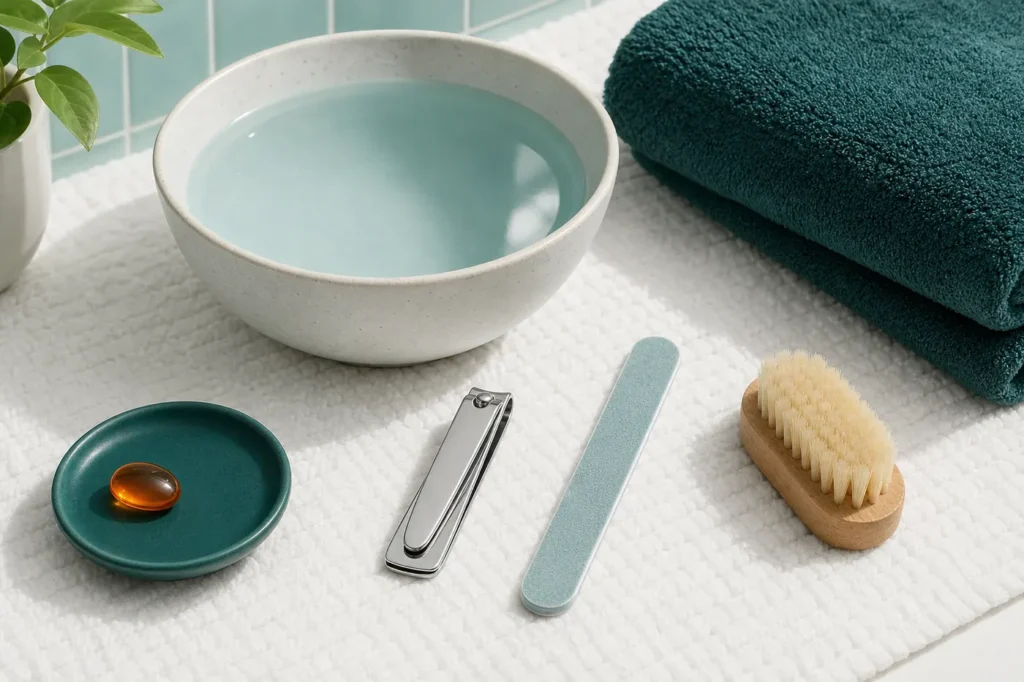
Basin of warm water with toenail clippers, emery board and towel laid out for trimming thick toenails

What You Need to Know Before You Start

Trimming fungal toenails safely requires softening the nail first, using the right tools, and cutting straight across to avoid ingrown nails. If you have diabetes, peripheral neuropathy or poor circulation, see a podiatrist for nail debridement — do not attempt home trimming of severely thickened nails. For everyone else, the main risk is forcing a clip on a brittle or very thick nail, which can crack the nail or injure the nail bed.

At a Glance

The Routine

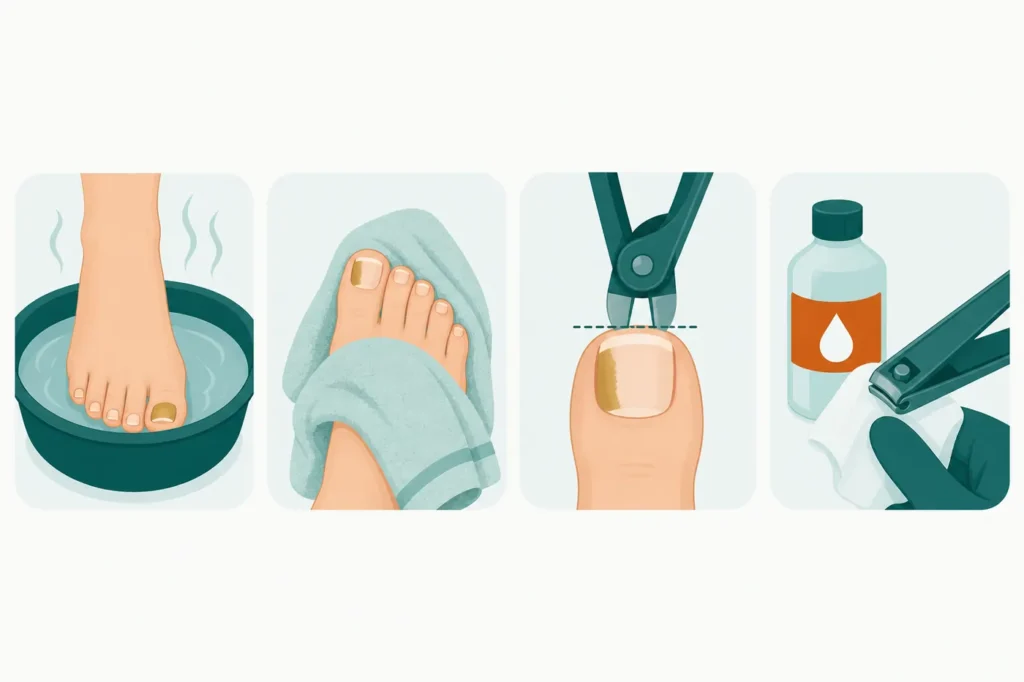
1. Soak2. Cut3. File4. Clean
Warm water for 10 minutes to soften the nailDry fully, then cut straight acrossSmooth sharp edges with an emery boardDisinfect clippers before and after

Key Facts

Soften first

10–15 min soak; urea cream helps

How to cut

Straight across; leave 1–2 mm

Clean tools

Isopropyl alcohol (70%+)

See a podiatrist if

Diabetes, neuropathy or poor circulation

How to Trim Fungal Toenails: Step by Step

Four-step illustration of soaking, drying, cutting straight across and disinfecting nail clippers

Tools You Need to Trim Thick Fungal Toenails

Standard drugstore nail clippers are often inadequate for severely thickened fungal toenails. The nail is too dense; forcing a standard clipper can crack the nail or cause pain. Better options:

Thick toenail clippers on Amazon:

Kerasal (softens thick nails before trimming):

Soften Thick Toenails Before Trimming (Soaks and Urea)

Softening the nail before cutting is the most important step for thick, brittle or crumbling nails. Three approaches work well:

How to Cut and File Fungal Toenails Safely

Cleaning Clippers to Stop Toenail Fungus Spreading

Nail clippers can carry fungal spores. Sharing clippers between fungal and healthy nails, or between people, can spread the infection. Proper tool hygiene is a standard clinical recommendation.

When a Podiatrist Should Trim Your Toenails (Diabetes)

When a Podiatrist Should Trim Your Toenails

Podiatrists can perform nail debridement — professional thinning and trimming of thickened nails. This is often done as part of a broader nail fungus treatment plan, and improves the effectiveness of any topical antifungal applied afterward. Toenail fungus treatment for seniors →

How to Trim Fungal Toenails: Common Questions

Thick fungal toenails typically show: yellowing, browning or discoloration; a noticeably denser, harder nail; crumbling at the edges; debris accumulating under the lifted nail plate; separation of the nail from the nail bed (onycholysis); and sometimes a faint musty odor. The nail may press painfully into footwear. Full symptoms guide →

Nail removal (avulsion) eliminates the physical structure housing the infection, but it does not eliminate the fungus if it remains in the nail bed or surrounding tissue. Without antifungal treatment after avulsion, the infection typically re-establishes in the new nail as it grows. Total nail avulsion is used as a last resort for severely dystrophic nails causing ongoing pain, usually in combination with antifungal treatment afterward.

Soak the nail for 10 minutes to soften it. Use heavy-duty pliers-style nail clippers designed for thick toenails. Cut straight across in small sections from one side to the other. Keep cuts shallow. File the edges smooth. Disinfect all tools with isopropyl alcohol before and after. If the nail is very thick or causing pain, see a podiatrist for professional debridement.

Vicks VapoRub contains thymol, an ingredient with in vitro antifungal activity against dermatophytes. A small pilot study (Derby 2011) reported some visual improvement in a subset of participants. It does not have FDA approval for nail fungus and has not been tested in a large randomized controlled trial. Its nail penetration is limited, the same constraint affecting all OTC topicals. It may help as a mild adjunct for very superficial infections.

Sources

  1. American Academy of Dermatology. Nail fungus: tips for managing. aad.org (accessed Nov 2026).
  2. Mayo Clinic. Nail care tips. mayoclinic.org/healthy-lifestyle/adult-health/in-depth/nails/art-20546831 (accessed Nov 2026).
  3. WikiHow. How to Trim Toenails with Fungus. wikihow.com (accessed Nov 2026).
  4. Derby R et al. Novel treatment using over-the-counter mentholated ointment. J Am Board Fam Med 2011;24(1):69–74.
  5. American Diabetes Association. Foot care standards. diabetes.org (accessed Nov 2026).

Medical disclaimer: This content is for informational purposes only and is not a substitute for professional medical advice, diagnosis or treatment. People with diabetes, peripheral vascular disease, neuropathy or reduced foot sensation should consult a podiatrist before attempting home nail trimming.

Ready to treat the infection behind the thick nail?

Answer 4 quick questions and get a treatment recommendation matched to your nails.