Home › Best Treatment › Seniors

Best Toenail Fungus Treatment for Seniors (2026): Safe, Evidence-Based Options

Affiliate Disclosure: This page contains affiliate links. If you buy through our links we may earn a commission at no extra cost to you. Evaluations are independent and evidence-based. Full disclosure →
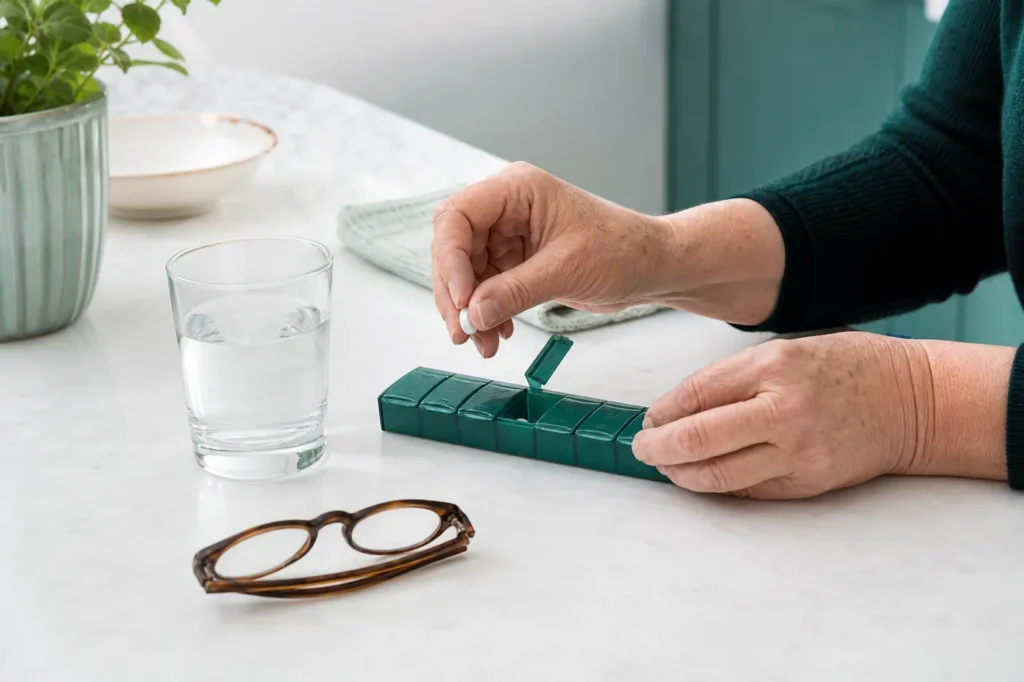
Older adult's hands sorting a pill organizer before starting toenail fungus treatment

What Works for Seniors with Toenail Fungus

Toenail fungus in older adults requires extra care: terbinafine Strong Evidence remains the most effective option but requires checking for drug interactions (especially statins, warfarin, tricyclics) and baseline liver function. OTC topicals (Fungi-Nail, Kerasal) are low-risk starting options for mild cases. Diabetics and those with peripheral vascular disease should see a podiatrist before treating. Nail growth slows with age, extending treatment timelines to 18–24 months.

At a Glance

Evidence Strength (prescription pills)

Strong ✓ModerateLimitedAnecdotal

How we grade evidence

Key Facts

Strongest study evidence

Prescription pills, after drug-interaction checks

Mild cases

OTC Fungi-Nail or Kerasal, low risk

Prevalence

~20% over 60; ~50% over 70

Grow-out

18–24 months in older adults

Why Toenail Fungus Treatment Is Different for Seniors

Toenail fungus (onychomycosis) becomes more common with age: one review puts prevalence at about 10% overall, 20% in people over 60 and 50% in people over 70. (Westerberg DP, Voyack MJ, Am Fam Physician 2013.) Three factors make treatment more complex in older adults:

Best Toenail Fungus Treatment for Seniors: Options at a Glance

TreatmentGradeSenior-specific note
Fungi-Nail (undecylenic acid)Anecdotal Evidence (undecylenic acid: Limited)Low-risk OTC adjunct; well-tolerated in elderly; not sufficient alone for moderate–severe
Kerasal (keratolytic)Anecdotal Evidence (urea: Limited)Softens thick nails; caution in diabetics — consult podiatrist first

Prescription medicines are not in this table because we can’t offer or prescribe them. For information, a doctor or podiatrist can prescribe:

  • Oral terbinafine: Grade: Strong Evidence; Senior-specific note: Check CYP2D6 drug interactions; baseline LFTs; use with caution in heart failure.
  • Oral itraconazole (pulse): Grade: Strong Evidence; Senior-specific note: Negative inotrope — contraindicated in heart failure; multiple drug interactions.
  • Efinaconazole 10% (Jublia): Grade: Moderate Evidence; Senior-specific note: Lower systemic exposure; preferred when oral is contraindicated; needs adequate circulation.

Oral Antifungals for Seniors: Benefits and Precautions

Strong Evidence — Oral terbinafine remains the most effective treatment available for toenail fungus in seniors, with ~38% complete cure in the FDA label trials (Lamisil prescribing information). However, prescribing requires careful safety review. Full terbinafine guide →

Drug Interaction Checklist for Seniors Starting Antifungals

Always review this checklist with a pharmacist or prescribing physician before starting oral antifungal therapy. Interactions listed are general guidance, not exhaustive. (Prescribers’ Digital Reference; Lexi-Interact 2026.)

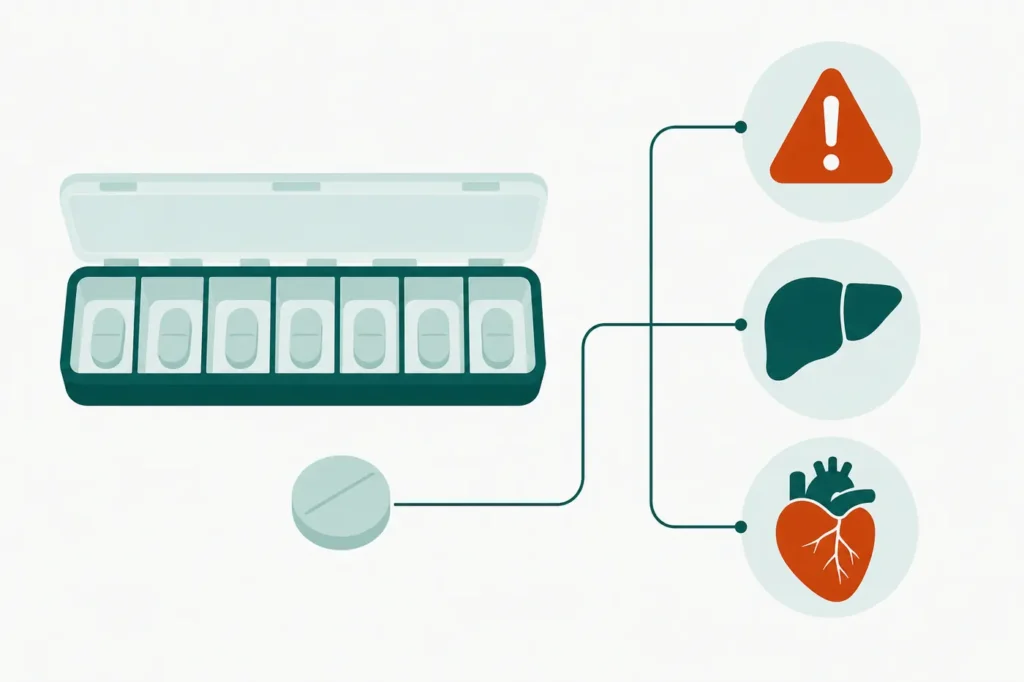
Illustration of checking drug interactions before an oral antifungal in seniors

Interactions to check with your doctor or pharmacist, by medication class:

  • Statins: Terbinafine interaction: Minor; monitor for muscle symptoms; Itraconazole interaction: Significant — raises statin levels; risk of rhabdomyolysis.
  • Warfarin: Terbinafine interaction: May potentiate; monitor INR; Itraconazole interaction: Significantly increases warfarin effect; monitor closely.
  • Digoxin: Terbinafine interaction: No significant interaction; Itraconazole interaction: Raises digoxin levels; toxicity risk; monitor digoxin level.
  • Heart medications (CCBs): Terbinafine interaction: No significant interaction; Itraconazole interaction: Raises CCB levels; hypotension risk.
  • Antidepressants (TCAs, SSRIs): Terbinafine interaction: CYP2D6 — raises TCA levels; use with caution; Itraconazole interaction: Raises many antidepressant levels; check individual drugs.
  • Heart failure: Terbinafine interaction: Use with caution (poor circulation reduces efficacy); Itraconazole interaction: Contraindicated — negative inotrope.
  • Metoprolol: Terbinafine interaction: CYP2D6 — raises metoprolol; monitor blood pressure; Itraconazole interaction: Moderate interaction.

Prescription Topical Antifungals for Seniors

Moderate Evidence — Prescription topicals (efinaconazole 10%, tavaborole 5%, ciclopirox 8%) have minimal systemic absorption and avoid the drug interaction concerns of oral agents. They are particularly useful for seniors who cannot tolerate oral antifungals. Trade-off: lower cure rates than oral therapy.

OTC Toenail Fungus Treatment Options for Seniors

Limited Evidence — OTC options are a reasonable first step for seniors with mild toenail fungus, particularly while awaiting a medical appointment. They are low-risk and do not interact with common medications.

Fungi-Nail (undecylenic acid 25%)

An FDA-approved antifungal for skin fungal infections. Well-tolerated by elderly patients. May help with superficial or mild nail and surrounding skin involvement. Not FDA-approved for onychomycosis and insufficient alone for moderate–severe cases.

Kerasal Fungal Nail Renewal (keratolytic)

Contains urea 10%, lactic acid and propylene glycol. No antifungal action. Softens and thins thickened nails, improving appearance and ease of trimming. Diabetics: consult a podiatrist before using keratolytics on feet; skin sensitivity and healing may be impaired.

Seniors with Diabetes and Toenail Fungus

Seniors with Diabetes: See a Podiatrist First

Toenail fungus in diabetic seniors carries additional risk. Diabetes-related neuropathy and vascular disease reduce sensation and healing, making self-treatment riskier. The American Diabetes Association recommends annual podiatric foot exams for all diabetics.

Trimming Thick Fungal Toenails Safely for Seniors

Thickened nails can make standard nail clippers ineffective and cause pain or injury. Seniors, especially those with limited flexibility, benefit from proper tools and technique.

Best Toenail Fungus Treatment for Seniors: Common Questions

For mild cases, OTC topicals (undecylenic acid products) carry low risk and no drug interactions. For moderate or severe cases, prescription topicals like efinaconazole have minimal systemic absorption and fewer interactions than oral agents. Oral terbinafine has the strongest evidence for efficacy but requires a drug interaction review and baseline liver function test before prescribing. All seniors with diabetes or vascular disease should consult a podiatrist before starting any treatment.

Yes, with appropriate precautions. Terbinafine is generally safe for older adults, but requires checking for interactions with common medications: statins, warfarin, tricyclics, metoprolol, codeine. A baseline liver function test is required. Efficacy may be reduced in seniors with peripheral vascular disease, since adequate blood supply is needed to deliver the drug to the nail bed. Full terbinafine guide →

Longer than in younger adults. Toenail growth slows with age — from about 1.5 mm/month in young adults to as low as 0.9 mm/month. Even after successful treatment (confirmed by lab test), full visual regrowth may take 18–24 months. Recurrence is common (up to 50% within 3 years) without prevention measures. Full timeline guide →

Only mild cases with no foot complications, under guidance. Diabetic neuropathy reduces sensation, meaning injury from improper nail cutting may go unnoticed. The American Diabetes Association recommends annual podiatric foot exams. Seniors with diabetes and toenail fungus should see a podiatrist for assessment, diagnosis confirmation, and supervised treatment.

Sources

  1. Ferrari J. Fungal toenail infections. Am Fam Physician 2015;92(2):132–133.
  2. L.I.ON. study. Terbinafine vs itraconazole. BMJ 1999;318:1031–1035.
  3. Elewski BE et al. Efinaconazole 10%. JAAD 2013;68(4):600–608.
  4. Orentreich N, Markofsky J, Vogelman JH. The effect of aging on the rate of linear nail growth. J Invest Dermatol 1979;73(1):126–30.
  5. Prescribers’ Digital Reference (PDR). Terbinafine and itraconazole drug interactions. pdr.net (accessed Nov 2026).
  6. American Diabetes Association. Standards of Medical Care. Diabetes Care 2026 (Suppl 1).

Medical disclaimer: This content is for informational purposes only and is not a substitute for professional medical advice, diagnosis or treatment. Always consult a qualified healthcare provider before starting any treatment. Seniors taking multiple medications should consult their pharmacist or physician before starting antifungal therapy.

Not sure which treatment is safest for you?

Answer 4 quick questions and get a recommendation matched to your nails.