Home › Treatments › Urea Cream

Urea Cream for Toenail Fungus (2026): What It Does, What It Does Not, and How to Use It Right

Disclosure: This page contains affiliate links. If you buy through a link on this page we may earn a small commission at no extra cost to you. Our evidence grades are based on published clinical data only. See how we review →
Unlabeled urea cream tube and jar with a nail file on a bathroom counter

Urea Cream for Toenail Fungus: Answer in 60 Seconds

Evidence grade: Limited Evidence for urea alone as a nail treatment.

Urea cream is a keratolytic — it softens and breaks down thickened keratin. At concentrations of 40–50%, it can dissolve the nail plate enough to deliver antifungal agents underneath, which is why clinicians use it as a debridement tool (PMC7548867, 2020). Urea itself is not antifungal. It often gets lumped in with antifungal treatments because it is sold next to them and marketed for “nail renewal.” Used alone, it may improve nail appearance and softness, but it cannot clear an active fungal infection without an antifungal component. Kerasal (urea + lactic acid) is sold as a cosmetic nail conditioner, not an antifungal treatment.

At a Glance

Evidence Strength (urea alone)

StrongModerateLimited ✓Anecdotal

How we grade evidence

Combination Timeline (urea + antifungal)

7–14 days2–4 weeks3–6 months
Urea 40% daily softens the diseased nailTypical urea + antifungal protocolAntifungal until clear nail grows out

Key Facts

What it is

Keratolytic (nail softener)

Antifungal?

No, not on its own

Status

OTC up to 40%

Best for

Thick nails, before an antifungal

What Is Urea Cream?

Urea (carbamide) is a small organic molecule (CH₄N₂O) that occurs naturally in the body as a waste product of protein metabolism. At low concentrations (2–20%), urea acts as a humectant — it draws water into the skin, hydrating and softening dry, rough areas. At high concentrations (40–50%), it becomes keratolytic: it actively dissolves the hydrogen bonds in keratin, breaking down hardened, dystrophic nail tissue.

These dual properties make urea useful in dermatology for:

What urea cream cannot do: it has no antifungal, antibacterial or antiviral activity of its own. Using urea cream alone on a nail fungal infection treats the symptoms of a thickened nail — it does not address the fungal organism causing the damage.

Is Urea Cream Antifungal? The Evidence

Evidence grade for urea alone for nail fungus: Limited Evidence (nail-softening and appearance endpoints only). Urea is not an antifungal agent.

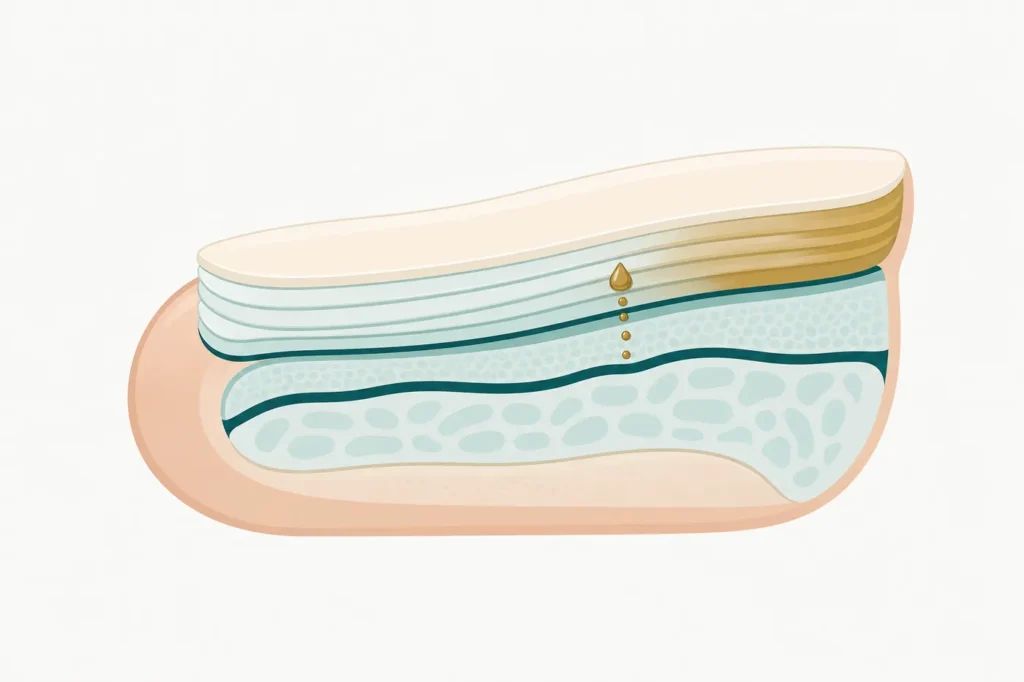
Several peer-reviewed studies have tested urea in combination with antifungals for onychomycosis, and found that the combination outperforms the antifungal alone — because the urea improves nail penetration. A small 2020 study (Shemer A et al., Skin Appendage Disord 2020;6(5):304–8; PMC7548867) found that once-weekly urea 40% + bifonazole 1% ointment under occlusion led to earlier removal of the diseased nail than daily application. Urea itself is not the antifungal agent.

Diagram of urea cream softening a thick toenail so an antifungal can reach the fungus below

What this means in practice:

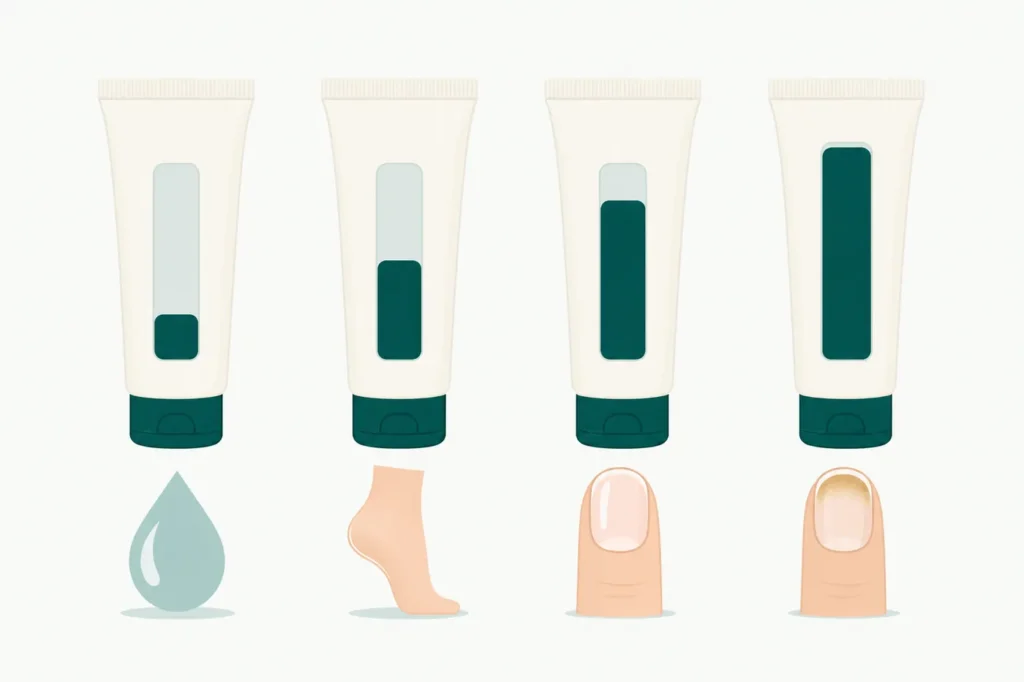
Urea Cream Concentrations: 10%, 20%, 40%, 50%

The concentration of urea determines what it can do to the nail. OTC products typically top out at 40% urea. The table below is a clinician-grade summary:

Four cream tubes showing how higher urea strength moves from moisturizing to softening thick nails
ConcentrationPrimary effectCommon useRx?
2–10%Humectant / moisturiserDry skin, heel creamsNo
20–25%Mild keratolyticRough skin, mild hyperkeratosisNo (most)
40%Strong keratolytic / nail softenerNail dystrophy, nail debridementNo/Rx varies
50%Nail dissolutionChemical nail avulsion (pre-treatment)Rx/clinical

OTC urea 40% products (e.g., Kerasal Fungal Nail Renewal contains urea + lactic acid) can soften thickened, discolored nails. They are marketed for “nail renewal” — not to treat the underlying fungal infection. If you are treating a confirmed fungal infection, use an antifungal alongside or after the urea prep.

How to Use Urea Cream for Toenail Fungus

If you are using urea cream as a preparatory softening step before applying a topical antifungal:

How long to use it: Urea cream for nail softening is used as long as the nail remains thickened. There is no standard course length for standalone use. Clinical combination protocols typically run 2–4 weeks of daily urea plus antifungal.

Urea as a Combination Tool: Clinical Evidence

Evidence grade for urea + antifungal combination therapy: Moderate Evidence

The most studied combination is urea + bifonazole. Urea 40% is applied daily to the nail for 7–14 days to soften and remove the dystrophic nail layer, then bifonazole cream is applied daily until clear nail grows out (typically 3–6 months).

In a small 2020 study (Shemer A et al., Skin Appendage Disord 2020;6(5):304–8), once-weekly application with sealing removed the diseased nail in about 11 days on average, versus about 19 days with daily application. Clearance of the infection was not the study endpoint, and the evidence base is much smaller than for oral terbinafine.

Important: Bifonazole is not available in OTC form in the US. The combination therapy described in these studies requires a prescription or is available outside the US. If you are in the US and want prescription-level combination treatment, see a clinician. For an option you can buy today, see Fungi-Nail Anti-Fungal alongside urea.

Kerasal and OTC Urea Products: What You Are Actually Buying

Kerasal Fungal Nail Renewal is the most prominent OTC urea-based nail product in the US. Its label says “nail renewal” — it makes no claim to treat nail fungal infection. Its active cosmetic ingredients are urea and lactic acid. Kerasal is a cosmetic product that softens and improves the appearance of thickened, discolored and brittle nails.

Who it helps:

Who it does not help: People who have an active, untreated nail fungal infection and are using Kerasal as the only treatment. Softening the nail without an antifungal active ingredient will not clear the infection.

Urea Cream Side Effects and Precautions

Urea cream is generally safe when used as directed. Common side effects:

Precautions:

Urea Cream vs Other Nail Softeners and Antifungals

Product/approachAntifungal?EvidenceGoal
Urea 40–50% cream aloneNoLimited EvidenceNail softening, appearance
Urea + bifonazole comboYes (bifonazole)Moderate EvidenceTreat nail fungus
OTC undecylenic acidYesLimited EvidenceTreat skin fungus; mild nail

Prescription treatments, for information only (a doctor or podiatrist can prescribe these):

  • Prescription efinaconazole (Jublia): Antifungal?: Yes; Evidence: Moderate evidence; Goal: Treat nail fungus (topical Rx)
  • Oral terbinafine: Antifungal?: Yes; Evidence: Strong evidence; Goal: Treat nail fungus (oral)

Urea Cream for Toenail Fungus: Common Questions

Urea cream is not an antifungal, so it cannot clear a fungal infection on its own. At 40–50%, it softens and breaks down thickened nail tissue (keratolytic effect), which may help antifungal products penetrate the nail. Urea + bifonazole combination therapy has Moderate evidence for onychomycosis (PMC7548867). Urea alone has Limited evidence for cosmetic nail improvement only.

Kerasal Fungal Nail Renewal contains urea and lactic acid as its active cosmetic ingredients. It is not a pure urea cream, and it is not an antifungal product. It softens and cosmetically improves thickened or discolored nails. If you have an active fungal infection, Kerasal alone will not clear it. Pair it with an antifungal or use an antifungal product directly.

Clinical combination protocols use 40% urea for nail debridement — daily application for 7–14 days to soften and remove the dystrophic nail — followed by daily antifungal cream for 3–6 months. Lower concentrations (10–25%) may soften the nail and improve appearance but have less nail-penetration effect. Lower-concentration OTC urea products are mainly moisturizers.

Yes — in fact, this is the evidence-based approach. Apply urea cream first to soften the nail, allow it to absorb, then apply the topical antifungal. This can improve antifungal penetration through the nail plate. The best-studied combination is urea + bifonazole (available in EU/UK; prescription in many markets). In the US, pair urea 40% cream with an OTC antifungal (undecylenic acid) or prescription topical nail antifungal.

Nail softening with 40% urea cream typically takes 7–14 days of daily application. Cosmetic improvement in nail appearance (Kerasal-type products) may be seen in 4–8 weeks of consistent use. If using urea as part of a combination antifungal protocol, expect nail clearance to take 6–12 months — consistent with how long nails take to grow out after the fungus is cleared (12–18 months for full regrowth).

The term “Amish cure” is used in health marketing but is not a documented traditional Amish treatment in the medical literature. Ingredients promoted under this label (vinegar, tea tree oil, etc.) have Anecdotal to Limited evidence grades. None has been confirmed effective in a controlled human trial for nail fungus. More on “instant cure” claims →

Sources

1. Shemer A, Eshel Y, Gupta AK, et al. Once weekly application of urea 40% and bifonazole 1% leads to earlier nail removal in onychomycosis. Skin Appendage Disord 2020;6(5):304–8. PMC7548867.

2. Friedman-Birnbaum R, Cohen A, Shemer A, et al. Treatment of onychomycosis: a randomized, double-blind comparison study with topical bifonazole-urea ointment alone and in combination with short-duration oral griseofulvin. Int J Dermatol 1997;36(1):67–9.

3. Elewski BE et al. Efinaconazole 10% solution. JAAD. 2013;68(4).

4. FDA OTC monograph: cosmetic nail products (21 CFR Part 740).

5. Kerasal Fungal Nail Renewal product label (Alva-Amco Pharmacal Companies, Inc.).

Medical disclaimer: This page is for informational purposes only. Always consult a qualified healthcare professional before starting any treatment.

Not sure which treatment fits your case?

Our finder covers mild through severe cases — including diabetes and special situations.