Home › Treatments › Undecylenic Acid for Toenail Fungus

Undecylenic Acid for Toenail Fungus: Does It Work? (Limited Evidence)

Affiliate disclosure: Some links on this page are affiliate links. If you buy through them, we may earn a commission at no extra cost to you. See our disclosure policy →

Plain dropper bottle of undecylenic acid liquid and a nail file on a bathroom shelf

The Short Answer

Undecylenic acid is one of the oldest OTC antifungal actives — a fatty acid derivative found in products like Fungi Nail and Fungicure. It is FDA-approved for athlete’s foot — not for toenail fungus (onychomycosis). No OTC product is FDA-approved to treat nail fungus. Evidence for nail use: Limited, largely because a topical struggles to penetrate the nail plate. It may help mild, superficial infections or prevent recurrence after treatment, but cannot clear established nail fungus as reliably as prescription options. Talk to your doctor or pharmacist if you have confirmed nail fungus.

At a Glance

Evidence Strength

StrongModerateLimited ✓Anecdotal

How we grade evidence

Time to Results

DailySeveral weeks2–3 mo12–18 mo
Apply once or twice a dayMinimum consistent useNo clear growth at base? See a clinicianFull nail grow-out

Key Facts

Status

OTC; FDA-approved for athlete’s foot only

Cost

~$12–$24 per product

Best for

Mild, superficial cases; recurrence

Applied

Once or twice daily to nail and skin

Undecylenic Acid for Toenail Fungus: How It Works

Undecylenic acid is an 11-carbon unsaturated fatty acid derived from castor oil. It has been used as an antifungal since the 1940s. Its mechanism is fungistatic: it disrupts fungal cell membrane function by interfering with fatty acid metabolism, inhibiting fungal cell growth. It is active against dermatophytes (Trichophyton species) and has some activity against Candida species, giving it a broader spectrum than tolnaftate.

Under the FDA OTC drug monograph for antifungal products (Title 21 CFR Part 333, Subpart C), undecylenic acid is an approved active ingredient for athlete’s foot (tinea pedis) and ringworm (tinea corporis). Onychomycosis — fungal nail infection — is not listed in the monograph. No OTC topical antifungal is FDA-approved to treat onychomycosis.

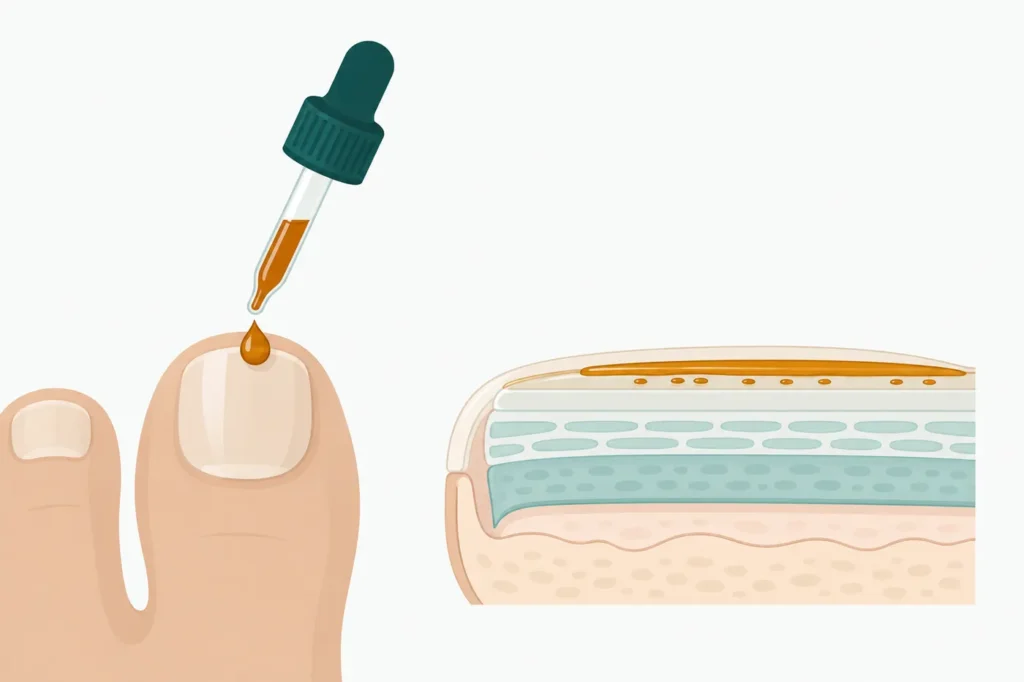
Products such as Fungi Nail (undecylenic acid 25%) are marketed for nail fungus, but marketing claims do not equal FDA approval for that indication. The core challenge for nail use remains penetration: undecylenic acid must pass through 0.5–1.0 mm of dense nail keratin to reach the nail bed where dermatophytes live. Liquid formulations at higher concentrations (25%) may achieve somewhat better contact than a 1% cream, but reliable therapeutic levels at the nail bed are not established in clinical trials.

Diagram of a topical antifungal on the nail surface with limited reach into the nail plate

Does Undecylenic Acid Work on Toenail Fungus? The Evidence

Limited Evidence   Evidence grade: Limited

No rigorous randomized controlled trial has tested undecylenic acid specifically for onychomycosis. The clinical evidence for nail use is limited:

  • Athlete’s foot studies: Strong evidence for skin fungal infections where it is indicated. Nail fungus is structurally different — nail penetration is the barrier.
  • OTC topicals review (PMC7073424): A review of OTC topical antifungals concluded that nail penetration is the primary obstacle; undecylenic acid topicals show limited efficacy for established nail infections.
  • In vitro data: Undecylenic acid inhibits dermatophytes and Candida in lab conditions. Lab activity does not automatically translate to clinical efficacy through a nail plate.
  • Systematic review of topical foot treatments (Hart R et al., BMJ 1999; PMC28154): undecenoic (undecylenic) acid was effective against fungal skin infections of the feet in placebo-controlled trials; the two nail trials included showed no significant differences between topical treatments.

Where undecylenic acid may have a role:

  • Prevention: Applying to skin around nails helps prevent athlete’s foot from spreading to the nail — a reasonable use within its labeled indications.
  • Mild or superficial infections: White superficial onychomycosis affects only the nail surface layer; higher-concentration liquid formulations may have more surface contact. Even so, evidence for complete nail clearance is not established.
  • Post-treatment maintenance: Some clinicians suggest OTC topicals to reduce reinfection risk after completing a prescription oral course.

Bottom line: Undecylenic acid is not recommended as a standalone treatment for established toenail fungus. It is a reasonable product for athlete’s foot prevention and adjunct use, but does not replace prescription antifungals for confirmed onychomycosis.

How to Use Undecylenic Acid for Toenail Fungus

If you use undecylenic acid on or around an affected nail — for prevention or as an adjunct — here is how it is typically applied. Note: this is not a proven standalone treatment for established onychomycosis.

Important limits: Undecylenic acid is not an FDA-approved treatment for onychomycosis. If your primary goal is clearing a confirmed nail infection, see a clinician and discuss prescription options. Do not use OTC products as a sole treatment for moderate or severe nail fungus.

Undecylenic Acid Side Effects and Warnings

Undecylenic acid is generally well tolerated when used topically as directed. Side effects are typically mild:

  • Local skin irritation: Mild burning, stinging, or itching at the application site. More common with higher-concentration products (25%) and on sensitive skin.
  • Contact dermatitis: Rare; discontinue if skin becomes inflamed, blistered, or worsens.
  • Systemic absorption: Very low with topical application; no significant systemic side effects are associated with topical use.
  • No liver effects: Unlike oral antifungals, topical undecylenic acid does not require liver monitoring.

Warning: Do not apply to broken, cracked, or deeply inflamed skin around the nail. The higher concentrations (25%) found in some nail products may be more irritating on damaged skin. If irritation persists or the nail worsens, stop and consult a clinician.

Who Should Not Use Undecylenic Acid for Toenail Fungus

Up to half of nails that look like fungus turn out to be nail psoriasis, nail trauma, or another condition — none of which responds to antifungals. A KOH scraping or PAS stain can confirm the diagnosis before you invest in long-term treatment. See all treatment options with evidence grades →

Undecylenic Acid Cost, Generics and Products

Undecylenic acid products are widely available OTC without a prescription. Price range is approximately $12–$24 for standard-sized products.

  • Fungi Nail (25% undecylenic acid): A widely available nail-specific liquid; one of the most searched OTC options for nail fungus.
  • Fungicure: Another well-known undecylenic acid product available in liquid and gel forms.
  • Store brands: Generic versions with the same active ingredient are typically less expensive.

Important: buying a product labeled for nail fungus does not make it FDA-approved for onychomycosis — the FDA monograph for undecylenic acid covers skin infections only.

Undecylenic Acid vs Other Toenail Fungus Treatments

TreatmentEvidence GradeComplete Cure RateFDA-Approved for Nails
Undecylenic acid (OTC)LimitedNot established for onychomycosisNo (approved for athlete’s foot only)
Tolnaftate (OTC)LimitedNot established for onychomycosisNo (approved for athlete’s foot only)

Prescription treatments, for information only (a doctor or podiatrist can prescribe these):

  • Ciclopirox 8% (Penlac): Evidence Grade: Moderate; Complete Cure Rate: 5.5–8.5% complete mycological cure (FDA label, 48 wks); FDA-Approved for Nails: Yes
  • Terbinafine oral (generic Lamisil): Evidence Grade: Strong; Complete Cure Rate: ~38% at 48 wks (FDA label); FDA-Approved for Nails: Yes
  • Jublia (efinaconazole 10%): Evidence Grade: Moderate; Complete Cure Rate: ~15–18% (JAAD 2013); FDA-Approved for Nails: Yes

No OTC product is FDA-approved to treat onychomycosis. Cure rates are for complete mycological cure; partial improvement rates differ.

How Long Toenail Treatment Takes

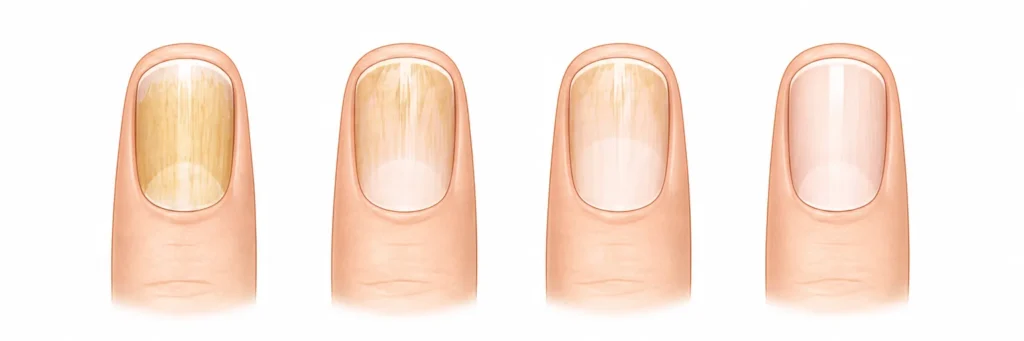
Toenails grow roughly 1–1.5 mm per month. A full toenail takes 12–18 months to grow from base to tip. Any improvement — with any treatment — requires this biology to play out. You will not see a clear nail in weeks regardless of what you apply.

Four toenails showing fungus progression from infected to clear

If you are applying undecylenic acid to the nail and see no sign of new clear growth at the base after 2–3 months, pursue a confirmed diagnosis and prescription treatment.

When to See a Doctor

See a podiatrist or dermatologist if: the nail is thickened, crumbling, or lifting from the bed; more than one nail is affected; you have diabetes, peripheral artery disease, or a weakened immune system; OTC products have not helped after 4–8 weeks; or you are unsure whether the problem is fungal. A lab test (KOH scraping or PAS stain) can confirm the diagnosis. Prescription options — oral terbinafine, itraconazole, or FDA-approved topicals — have significantly stronger evidence for established onychomycosis.

Talk to your doctor or pharmacist before starting any antifungal if you are pregnant, breastfeeding, or taking other medications.

Undecylenic acid is an 11-carbon unsaturated fatty acid derived from castor oil. It has been used as an antifungal ingredient since the 1940s. It is fungistatic — it inhibits fungal growth rather than directly destroying the organism — and is active against dermatophytes (the most common cause of toenail fungus) and some Candida species. At concentrations of 10–25%, it is the active ingredient in several OTC nail antifungal products.

Tea tree oil has similar limited evidence to undecylenic acid for nail fungus — antifungal activity in the lab, limited clinical data for established onychomycosis. A small study (Buck et al., 1994) found comparable outcomes to clotrimazole at 6 months, but no rigorous RCT has established it as an effective treatment for confirmed nail infection. Evidence grade: Limited. See our natural treatment options page →

Oral terbinafine requires a liver function test before starting because it can rarely cause hepatotoxicity. Doctors also review a patient’s full medication list for interactions (terbinafine is a CYP2D6 inhibitor, affecting some antidepressants and beta-blockers). Most healthy adults tolerate it well — it remains the highest-evidence oral treatment for onychomycosis. The hesitancy is about appropriate screening, not unusual danger for typical candidates. How online prescription services work.

No unique Amish remedy is clinically validated for toenail fungus. Ads and social media posts claiming an “Amish secret” are not supported by evidence. The same antifungal principles apply regardless of origin: for mild skin infections, OTC topicals; for established nail infections, prescription oral antifungals have the strongest evidence. If you see an ad claiming an ancient or ethnic remedy cures nail fungus, treat the claim with skepticism.

Medical disclaimer: This page is informational only and not medical advice. Consult a licensed clinician before treating onychomycosis. If you have diabetes or circulatory disease, see a podiatrist before applying any foot treatment.

Sources: FDA Title 21 CFR Part 333 (OTC antifungal drug products monograph); Mayo Clinic, Undecylenic acid topical route (drg-20066601, accessed Nov 2026); PMC7073424 (OTC topicals for onychomycosis review); Hart R et al., BMJ 1999;319(7202):79–82 (PMC28154; systematic review of topical foot treatments); FDA Lamisil (terbinafine tablets) prescribing information, NDA 020539 (~38% complete cure at week 48); Elewski et al., JAAD 2013 (Jublia 15–18%); AAFP 2015 (onychomycosis prevalence 3–12%).

Looking for a treatment with stronger evidence?

Use our finder to match your case to the right option.