Home › Treatments › Emuaid vs Kerasal

Emuaid vs Kerasal for Toenail Fungus (2026): Evidence-Graded Comparison

Disclosure: This page contains affiliate links. If you click and buy through a link we may earn a small commission at no extra cost to you. Our evidence grades are based on published clinical data only. See how we review →
A plain ointment jar and a slim tube on a bathroom shelf, comparing Emuaid and Kerasal

Emuaid vs Kerasal: The Short Answer

Emuaid and Kerasal show up together in nail fungus searches because both are sold in pharmacies as nail products, but they are fundamentally different products with different goals and different evidence.

Emuaid: Anecdotal Evidence for nail fungus. Kerasal: Anecdotal Evidence (urea: Limited) for cosmetic nail improvement (not antifungal).

Emuaid (EmuaidMAX) is classified as a homeopathic OTC product. Its active ingredient (bacillus ferment) has no controlled trial evidence for onychomycosis. Homeopathic products do not require FDA efficacy review before sale.

Kerasal Fungal Nail Renewal is a cosmetic nail conditioner (urea + lactic acid). It is not an antifungal. As a product it is Anecdotal (no study has tested it); its urea has Limited evidence for improving nail appearance — softening thickened nails and reducing discoloration. It does not treat the fungal infection itself.

Neither treats confirmed nail fungus reliably. Both have different goals: Emuaid claims antifungal activity without RCT evidence; Kerasal targets nail appearance without claiming antifungal action.

At a Glance

Side by Side

Emuaid (EmuaidMAX)Kerasal Fungal Nail Renewal
Homeopathic OTC ointment; Anecdotal evidence for nail fungus; no product RCT; $25–$60Cosmetic urea + lactic acid conditioner, not an antifungal; Anecdotal (urea Limited, cosmetic); $12–$20

Key Facts

Nail appearance

Kerasal

Lower cost

Kerasal ($12–$20 per 10 mL)

Broad skin first-aid

Emuaid (Anecdotal for nails)

Confirmed nail fungus

Neither: see a doctor or podiatrist

Emuaid vs Kerasal: Side-by-Side Table

Emuaid (EmuaidMAX)Kerasal Fungal Nail Renewal
Product typeHomeopathic first-aid ointmentCosmetic nail conditioner
Antifungal?Claims yes (homeopathic)No — cosmetic only
FDA classificationHomeopathic OTCCosmetic
Evidence gradeAnecdotal EvidenceLimited Evidence (cosmetic)
Product-specific RCT?NoNo (cosmetic)
Primary goalAntifungal / antimicrobialNail softening, appearance
Price range$25–$60 (1–2 oz)$12–$20 (10 mL)

How Emuaid Works on Toenail Fungus

Evidence grade for Emuaid/EmuaidMAX for nail fungus: Anecdotal Evidence

Emuaid is classified as a homeopathic OTC product. Homeopathic products are not required to demonstrate efficacy to the FDA before sale (they are regulated under a different framework from conventional OTC drugs). The active ingredient listed on the Emuaid label is bacillus ferment, a homeopathic preparation. No controlled clinical trial of Emuaid or EmuaidMAX for onychomycosis has been published in the peer-reviewed literature.

Emuaid ingredient grades:

IngredientRoleGrade
Bacillus ferment (active, homeopathic)Homeopathic activeAnecdotal Evidence
Emu oilVehicle / penetrationAnecdotal Evidence
Tea tree oilAuxiliary antifungalLimited Evidence skin
Argentum metallicum (silver)Homeopathic activeAnecdotal Evidence
Vitamin EAntioxidant / skinAnecdotal Evidence

What Emuaid has going for it: Tea tree oil is the best-evidenced of its ingredients — it has Limited evidence for skin fungus. Emu oil is a known penetration enhancer that may help deliver other ingredients deeper into the nail. User reviews are mixed but some report cosmetic improvement.

What Emuaid lacks: No FDA-registered antifungal active at a proven concentration. No product-level RCT for nail fungus. Homeopathic classification means its claims are not held to the same standard as conventional OTC drugs. Full Emuaid review →

How Kerasal Works on Toenail Fungus

Evidence grade for Kerasal Fungal Nail Renewal for nail appearance: Anecdotal Evidence (urea: Limited)

Kerasal Fungal Nail Renewal is a cosmetic nail conditioner, not an antifungal. Its label describes it as improving nail appearance — reducing thickening, discoloration and brittleness. It does not contain an FDA-registered antifungal active ingredient. It cannot clear a fungal infection.

Kerasal ingredient grades:

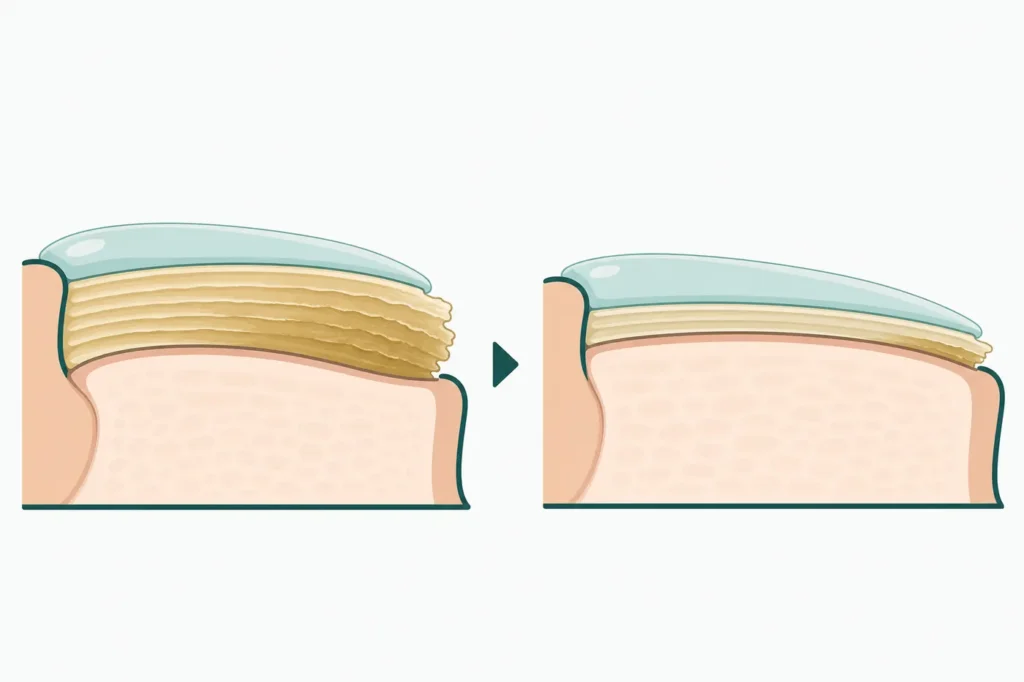
Illustration of a urea nail conditioner softening a thickened toenail over time
IngredientRoleGrade
Urea (keratolytic)Nail softener / keratolyticLimited Evidence (cosmetic)
Lactic acid (AHA)Exfoliant / nail conditionerLimited Evidence (cosmetic)
Propylene glycolPenetration / humectantVehicle

What Kerasal does well: Urea at the concentration in Kerasal softens hardened, thickened nails. Lactic acid gently exfoliates the nail surface, reducing discoloration. Clinical studies on urea cream for nail dystrophy show cosmetic improvement in nail appearance — though this is a cosmetic endpoint, not mycological cure. It is an honest product: its label does not claim to treat nail fungus.

Who it helps most: People who have cleared their nail fungus with an antifungal (OTC or prescription) and are left with residual nail thickening or discoloration. Also useful for nail dystrophy from non-fungal causes. Full Kerasal review →

Emuaid vs Kerasal: Cure Rates and What the Evidence Shows

TreatmentGoalEvidenceCure rate
OTC undecylenic acidSkin fungusLimited EvidenceNot est. (nail)
Emuaid (EmuaidMAX)Antifungal (claimed)Anecdotal EvidenceNot established
KerasalNail appearanceAnecdotal Evidence (urea: Limited)N/A (cosmetic)

Prescription treatments, for information only (a doctor or podiatrist can prescribe these; they are not products we sell or pick):

  • Oral terbinafine (Rx) — Goal: Treat nail fungus; Evidence: Strong Evidence; Cure rate: ~38% at 48 wks (FDA label)
  • Jublia / efinaconazole (Rx) — Goal: Treat nail fungus; Evidence: Moderate Evidence; Cure rate: 15–18%

Important distinction: Kerasal is Anecdotal as a product, and its urea has Limited evidence for cosmetic nail improvement — that is what it is designed to do, and it is honest about it. The cure rate is listed as “N/A (cosmetic)” because Kerasal does not make antifungal cure claims. Emuaid claims antifungal activity but has Anecdotal evidence for it — no independent RCT confirms its efficacy for nail fungus. For treating confirmed nail fungus, prescription options have significantly stronger evidence.

Emuaid vs Kerasal: How Long Each Takes

Emuaid vs Kerasal: Side Effects and Safety

Emuaid side effects:

Kerasal side effects:

Both products are generally considered low-risk for topical use. People with diabetes or circulatory conditions should consult a clinician before using any topical nail product.

Emuaid vs Kerasal: Cost and Where to Get It

Value note: Kerasal is significantly less expensive for a cosmetically-focused nail product. Emuaid is priced as a premium product with broad marketing claims. Neither has stronger evidence for nail fungus than OTC undecylenic acid products (Fungi-Nail: $10–$18), and neither approaches the evidence-to-cost ratio of generic oral terbinafine (~$10–$30 per course).

Who Should Choose Emuaid and Who Should Choose Kerasal

Choose Kerasal if:

Choose Emuaid if:

What we actually recommend for most people with nail fungus:

Can You Use Emuaid and Kerasal Together?

They target different aspects of nail health, so using them together is not inherently problematic. A reasonable sequence: apply Kerasal to soften the nail (keratolytic effect), allow to absorb, then apply Emuaid. However, there is no clinical evidence that this combination is more effective than either alone, and it doubles the cost. If nail fungus is confirmed, a prescription antifungal should be part of the protocol.

Emuaid vs Kerasal: Common Questions

EmuaidMAX is an over-the-counter homeopathic first-aid ointment. The manufacturer states it is used to relieve symptoms associated with minor and chronic skin conditions including nail fungus, athlete’s foot, eczema and others. Evidence grade for nail fungus specifically: Anecdotal Evidence — no controlled trial of EmuaidMAX for onychomycosis has been published. As a homeopathic product, it was not required to prove efficacy to the FDA before sale.

Fungi-Nail (undecylenic acid 25%) and Kerasal (urea + lactic acid) serve different purposes. Fungi-Nail is an FDA-registered OTC antifungal for skin fungus: Anecdotal Evidence as a product (undecylenic acid: Limited). Kerasal is a cosmetic nail conditioner for nail appearance: Anecdotal Evidence as a product (urea: Limited for cosmetic improvement). If you have athlete’s foot or early nail-edge fungal infection, Fungi-Nail is the right tool. If you have cleared nail fungus and want to improve residual nail thickening or discoloration, Kerasal is the right tool. See Fungi-Nail → See Kerasal →

Emuaid is marketed as an antifungal product. Evidence grade for nail fungus: Anecdotal Evidence. No independent controlled trial confirms its efficacy for onychomycosis. Tea tree oil, one of its ingredients, has Limited evidence for skin fungus in some RCTs. Its classified homeopathic active (bacillus ferment) has no nail-fungus trial evidence. For confirmed nail fungus, prescription options have significantly stronger evidence.

For its stated purpose — improving nail appearance, softening thickened nails, reducing discoloration — Kerasal is Anecdotal Evidence as a product; its urea has Limited evidence. Urea and lactic acid are established keratolytic ingredients. Kerasal is honest in its labeling: it does not claim to treat nail fungal infection. For people with residual nail changes after antifungal treatment, or nail dystrophy from other causes, it is a reasonable, low-cost option. It will not clear an active fungal infection.

The term “Amish cure” is used in health marketing but is not a documented traditional remedy for nail fungus in the medical literature. Products promoted under this label typically contain vinegar, essential oils or other home remedies with Anecdotal to Limited evidence grades. None has been confirmed in a controlled nail-fungus trial. More on “instant cure” claims →

Sources

1. Gupta AK, Foley KA, Mays RR, et al. Monotherapy for toenail onychomycosis: a systematic review and network meta-analysis. Br J Dermatol 2020;182(2):287–99.

2. Buck DS, Nidorf DM, Addino JG. Comparison of two topical preparations for the treatment of onychomycosis: Melaleuca alternifolia (tea tree) oil and clotrimazole. J Fam Pract 1994;38(6):601–5.

3. Shemer A, Eshel Y, Gupta AK, et al. Once weekly application of urea 40% and bifonazole 1% leads to earlier nail removal in onychomycosis. Skin Appendage Disord 2020;6(5):304–8. PMC7548867.

4. FDA OTC Homeopathic Drug Products guidance (Compliance Policy Guide 400.400; FDA Draft Guidance 2019).

5. Kerasal Fungal Nail Renewal product label (Alva-Amco Pharmacal Companies, Inc.).

Medical disclaimer: This page is for informational purposes only. Always consult a qualified healthcare professional before starting any treatment.

Not sure which treatment fits your case?

Our finder covers mild through severe cases — including diabetes and special situations.