Home › Can You Scrape Out Toenail Fungus?
Can You Scrape Out Toenail Fungus? (No — Here Is Why)
By Best Toenail Fungus Treatments · Updated 15 Nov 2026 · 8 min read
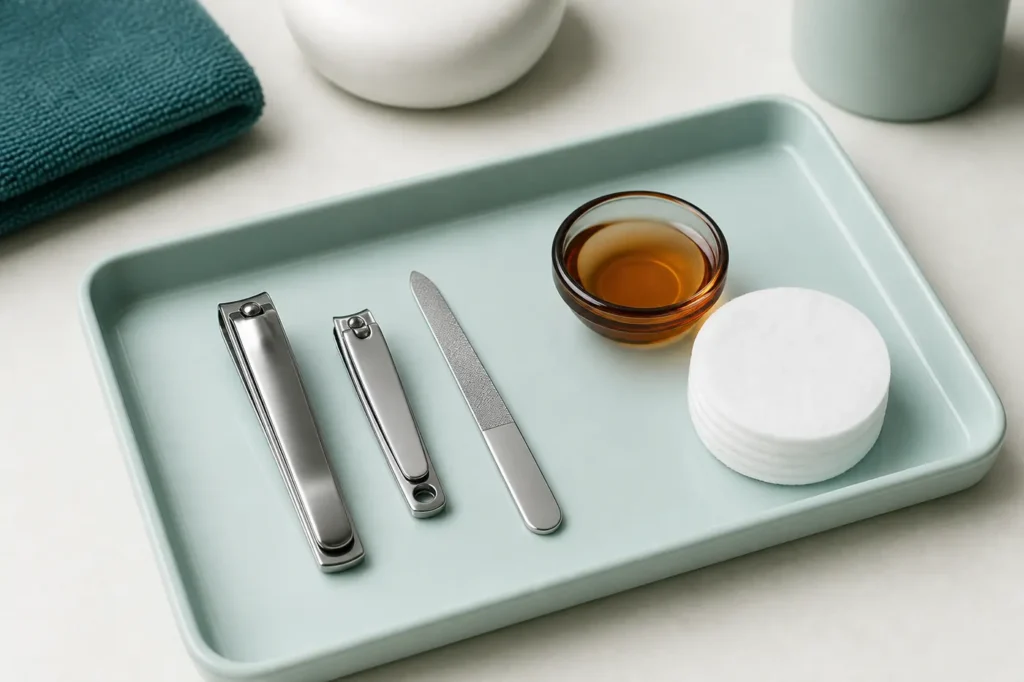
Home › Can You Scrape Out Toenail Fungus?
By Best Toenail Fungus Treatments · Updated 15 Nov 2026 · 8 min read
No. You cannot scrape out toenail fungus. The fungal infection is in the nail bed and nail plate — not just on the surface. Scraping or picking at the nail does not remove the fungus; it may spread it to other nails, introduce bacterial infection, and damage the nail matrix, causing permanent nail deformity. The only evidence-based treatments involve prescription oral or topical antifungals.
Evidence Strength (the claim)
StrongModerateLimitedAnecdotal ✓
The Claim vs. the Evidence
| The claim | What the evidence says |
|---|---|
| Scraping or picking removes the fungus | Fungus grows inside the nail plate and nail bed; scraping can spread it and damage the nail |
Key Facts
Claim
You can scrape out toenail fungus
Verdict
No: it does not remove the infection
Risks
Spread, bacterial infection, nail damage
What works
Oral terbinafine, ~38% complete cure
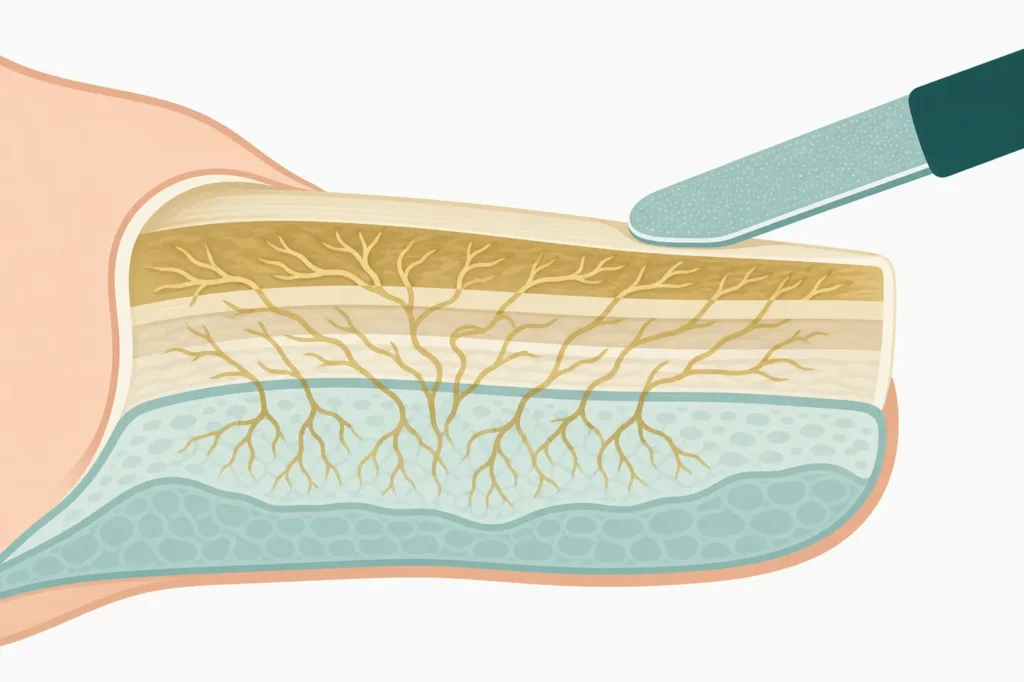
Toenail fungus (onychomycosis) is not a surface contamination. The fungi — most commonly Trichophyton rubrum — grow inside the nail plate and infect the nail bed beneath it. Scraping removes keratin from the nail surface, but fungal hyphae grow through the layers of the nail, sometimes reaching the nail matrix (the root).
Even vigorous scraping or filing only removes superficial nail material. It does not reach the fungal infection at the nail bed or nail matrix level. The fungus remains, continues growing, and the nail will show the same appearance as new nail grows out.
Nail debridement (thinning the nail) by a podiatrist can be useful as an adjunct to antifungal treatment — it can improve penetration of topical antifungals — but it is not a treatment on its own.
While you cannot scrape out the infection, proper nail hygiene helps your treatment work and reduces spread:
A podiatrist can remove a lot of the infected nail, safely, but that is not the same as removing the fungus. The usual step is debridement: in the office, the podiatrist trims the nail back and grinds or files the thickened plate down with sterile instruments, and clears debris from under the free edge. It is usually painless, it relieves pressure in shoes, and a thinner nail lets topical treatment reach further.
On its own, debridement does not clear the infection; fungus left in the nail bed keeps growing. It works as part of a plan with antifungal treatment, and a podiatrist can also take a clipping for a lab test to confirm it is fungus. For painful or badly damaged nails, partial or full nail removal is an option; see toenail removal for fungus. Read when to see a podiatrist for toenail fungus for the signs it is time to book.
Evidence-based treatments require antifungal medication, not mechanical removal:
No. Removing the nail does not remove the fungal infection from the nail bed. The fungus lives in the nail bed tissue; even if the nail plate is removed (a procedure called avulsion, done by a podiatrist), antifungal medication is still required to clear the infection from the tissue. Without antifungal treatment, the new nail growing back will become reinfected.
Filing can thin the nail and may help topical antifungal penetrate better, but it does not remove the fungal infection. Filing is used as an adjunct to antifungal treatment, not instead of it. Use a dedicated file for the infected nail and discard it or disinfect thoroughly to avoid spreading spores to other nails.
Gentle cleaning of the visible debris under the free nail edge is fine — it removes material where bacteria can accumulate. But aggressive probing under the nail, especially near attached areas, can cause pain, bleeding, and may spread the infection. Keep it gentle. This is different from scraping at the nail itself.
Yes, and it helps. Filing the thick top of the nail every week or two makes shoes more comfortable and lets topical treatments reach further. Use a file you keep only for that nail (or disinfect it), file in one direction when the nail is dry, and stop before you reach pink or tender nail. It won’t remove the infection by itself. See how to trim and file fungal toenails; if you have diabetes or poor circulation, let a podiatrist do it.
Medical disclaimer: This page is informational only and not medical advice. Consult a licensed clinician for diagnosis and treatment.
Sources: L.I.ON. / Sigurgeirsson et al. BMJ 1999;318:1031; Elewski BE. Clin Microbiol Rev 1998;11(3):415–429; AAFP 2015 (prevalence 3–12%).
Use our finder for a personalised recommendation.