Toenail Removal for Fungus (2026): When It Works, Costs and Recovery

Medical disclaimer: This page is for informational purposes only and does not constitute medical advice. Toenail removal is a medical procedure that must be performed by a qualified healthcare provider. Never attempt to remove a toenail at home.

Podiatry treatment room prepared for a toenail removal procedure

Quick Answer

Toenail removal is a procedure performed by a podiatrist, not a home treatment. Removing the nail relieves pressure and may improve antifungal penetration, but it does not eliminate the fungal infection — the fungus lives in the nail bed and surrounding skin. Removal works best as part of a combined antifungal treatment plan.

At a Glance

Evidence Strength

StrongModerateLimited ✓Anecdotal

How we grade evidence

How It Works

Step 1Step 2Step 312–18 mo
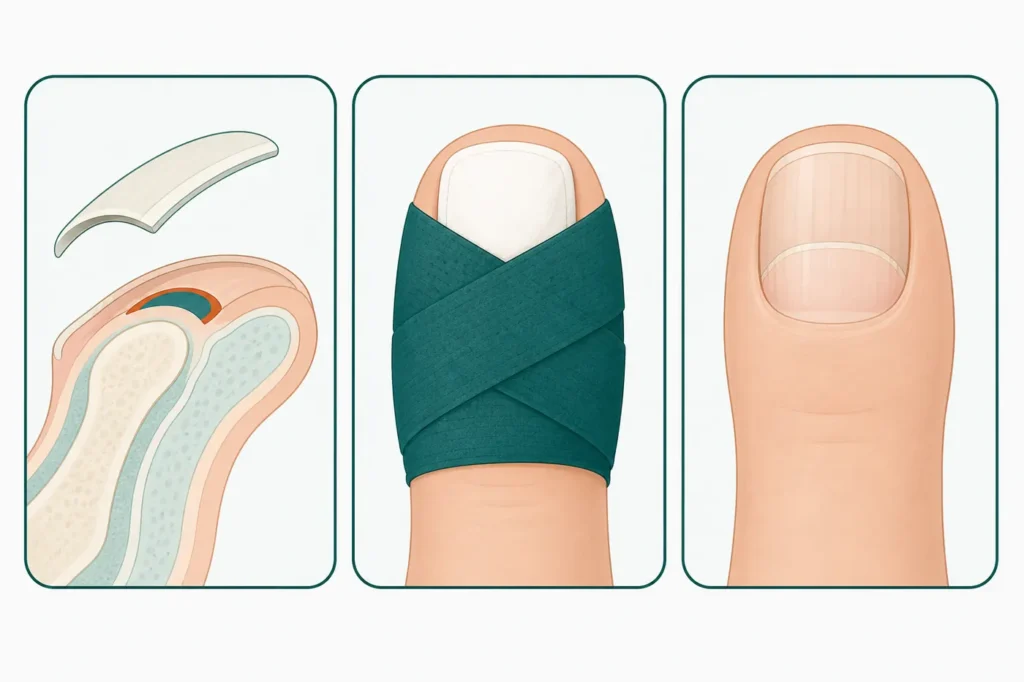
Local anaesthesia numbs the toeNail separated and removedWound care; antifungal therapy begins or continuesNail regrows (temporary avulsion only)

Key Facts

Performed by

Podiatrist or dermatologist

Types

Temporary avulsion or permanent matrixectomy

On its own

Does not clear the infection

Best for

Severe cases or after failed drug therapy

Toenail Removal for Fungus: Overview

Toenail removal (nail avulsion) is performed by a podiatrist or dermatologist in a clinical setting. There are two main types:

Critical fact: Toenail removal does not cure the fungal infection. Trichophyton and other causative fungi live in the nail bed, surrounding skin and sometimes the nail matrix — not just the nail plate itself. After removal, the new nail will regrow with fungus unless concurrent antifungal therapy is maintained. Removal improves topical drug access and relieves pressure; antifungal treatment does the work of eliminating the infection.

Medical disclaimer: This page is for informational purposes only and does not constitute medical advice. Toenail removal is a medical procedure that must be performed by a qualified healthcare provider. Never attempt to remove a toenail at home.

How Toenail Removal for Fungus Works

Diagram of toenail removal steps from nail lifting to bandage to regrowth

Temporary avulsion (nail regrows)

Permanent matrixectomy (nail does not regrow)

After nail removal, phenol is applied to the nail matrix for 1–3 minutes to destroy the cells that generate nail growth. This prevents regrowth permanently. It is used for recurrent, treatment-resistant cases or when ongoing nail problems cause significant quality-of-life issues.

Toenail Removal for Fungus: Success Rates

Evidence grade: Limited Evidence — available evidence comes from small studies and retrospective case series rather than large randomised trials.

Key findings from published data:

Toenail Removal for Fungus: Cost and Insurance

Costs vary by provider, location and whether one or multiple nails are involved. The figures below are approximate as of November 2026 — verify with your provider.

Toenail Removal for Fungus: What to Expect During Recovery

Toenail Removal for Fungus: Risks and Side Effects

Toenail Removal for Fungus vs Other Treatments

Nail removal is typically considered after antifungal therapy has failed or alongside it for severe disease. It is not a first-line option for mild-to-moderate nail fungus.

See best toenail fungus treatments for a full comparison including evidence grades for each option, and Lamisil (terbinafine) for the strongest oral antifungal data.

Frequently Asked Questions

Oral terbinafine achieves approximately 38% complete cure in the FDA label trials and is considered the most evidence-backed treatment. Severe cases may benefit from toenail removal combined with antifungal therapy. No single approach works for all patients; a podiatrist or dermatologist should guide the treatment plan.

Folk accounts describe apple cider vinegar soaks and herbal oil applications. No clinical trial evidence supports these for onychomycosis. They may have mild surface antiseptic effects but cannot penetrate the nail plate to reach the fungal organisms.

Onychomycosis is the medical term for nail fungal infection, most commonly caused by Trichophyton rubrum. It affects approximately 10% of the population and causes yellow, white or brown nail discolouration, thickening, crumbling and nail separation.

Toenail removal should only be performed by a podiatrist or physician under local anaesthesia. Home toenail removal or attempting to cut or scrape into the nail bed is dangerous and can cause serious infection, permanent nail deformity and nerve damage. See a podiatrist.

Sources

Westerberg DP, Voyack MJ. Onychomycosis: current trends in diagnosis and treatment. Am Fam Physician 2013;88(11):762–70.

Evans EG, Sigurgeirsson B. Double blind, randomised study of continuous terbinafine compared with intermittent itraconazole in treatment of toenail onychomycosis (L.I.ON). BMJ 1999;318(7190):1031–5.

Medical disclaimer: This page is for informational purposes only and does not constitute medical advice. Toenail removal is a medical procedure that must be performed by a qualified healthcare provider. Never attempt to remove a toenail at home.

Not Sure If Removal Is Right for You?

Compare antifungal treatments first — most people with mild to moderate nail fungus benefit from medication before considering a procedure.