Home › Home Remedies › Baking Soda for Toenail Fungus

Baking Soda for Toenail Fungus (2026): What the Evidence Actually Shows

Affiliate disclosure: Some links on this page are affiliate links. If you buy through them, we may earn a commission at no extra cost to you. See our disclosure policy →
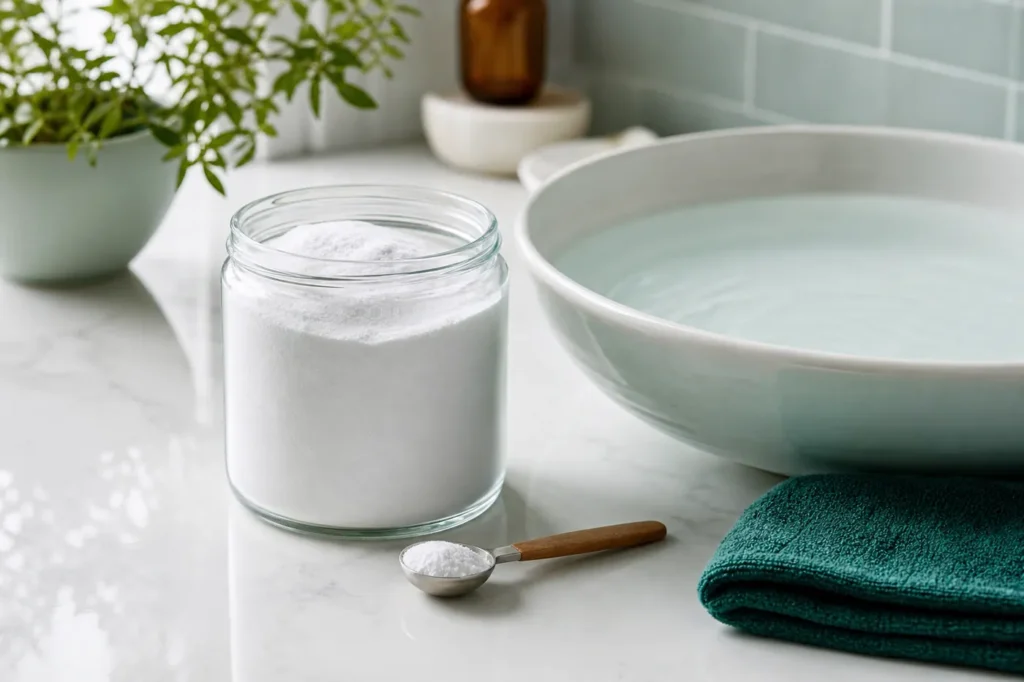
Plain jar of baking soda with a measuring spoon beside a warm foot-soak basin

The Short Answer

Baking soda (sodium bicarbonate) is one of the most-searched home remedies for toenail fungus: inexpensive, already in most kitchens, and widely shared online as a foot soak. It has shown antifungal activity against dermatophytes in lab studies, primarily by altering pH. However, there is no randomized controlled trial testing baking soda against nail fungus (onychomycosis) in humans. Evidence grade: Anecdotal. It may be a reasonable adjunct for foot odor and mild athlete’s foot symptoms, but should not replace a diagnosis or proven treatment for nail fungus.

At a Glance

Evidence Strength

StrongModerateLimitedAnecdotal ✓

How we grade evidence

Time to Results

Each soak4–6 wkRx topicalsGrow-out
15–20 min, then dry fullyNo change? Get a lab diagnosis48 weeks of daily use12–18 months for a new nail

Key Facts

Lab evidence

Inhibited dermatophytes in culture

Human trials

No RCT for nail fungus

Status

Kitchen staple; not FDA-approved for nails

Best for

Adjunct for foot odor

Baking Soda for Toenail Fungus: Does It Work?

Anecdotal Evidence   Evidence grade for nail use: Anecdotal

Baking soda is not a proven treatment for onychomycosis. No randomized controlled trial has tested sodium bicarbonate against nail fungus in humans with lab-confirmed outcomes. That is the central fact that determines its evidence grade.

What baking soda can do: it may help with foot odor, mild skin irritation around the nail, and potentially superficial athlete’s foot symptoms. These are legitimate uses with real user reports behind them — but they are not the same as treating an established nail infection.

What it cannot do: it cannot penetrate the nail plate to reach the fungus living at the nail bed. Even prescription drugs with specifically engineered nail-penetrating formulas achieve complete cure in only 15–18% of patients. A baking soda foot soak does not change the nail plate’s chemistry in a way that would reach the fungus underneath.

What the Research Says About Baking Soda and Nail Fungus

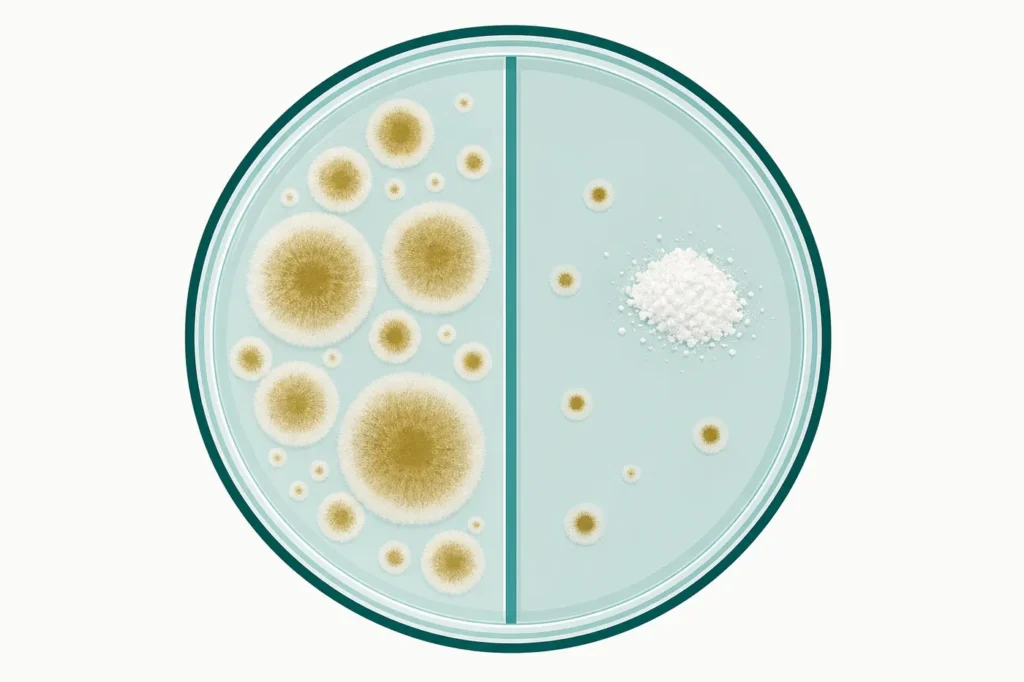
The best-cited study on baking soda and fungi is Letscher-Bru V et al., Mycopathologia 2013 — a lab study that found sodium bicarbonate inhibited dermatophyte growth (Trichophyton rubrum, T. mentagrophytes) in culture. This is the strongest scientific evidence supporting the concept, and it is a lab study, not a human clinical trial.

Key limitations of the lab data:

  • Lab (in vitro) antifungal activity does not automatically translate to clinical efficacy.
  • Fungus in a Petri dish has no nail plate to hide behind. Real nail fungus lives under a dense keratin barrier that blocks penetration.
  • The concentration effective in vitro may not be achievable in a skin or nail setting.

Mechanism: baking soda raises the pH of the local environment (it is alkaline). Dermatophyte fungi grow best in mildly acidic conditions; a more alkaline environment inhibits their growth. This is the same principle behind vinegar soaks (which lower pH instead). Neither has an RCT for nail fungus.

Petri dish diagram showing baking soda slowing fungus growth in a lab dish, not on a nail

How People Use Baking Soda on Toenail Fungus (and Safety Limits)

The most common approach is a baking soda foot soak. If you try this:

Some people also apply a paste (baking soda + small amount of water) directly to the nail surface and leave it for a few minutes before rinsing. This is unlikely to penetrate the nail plate but may improve surface appearance temporarily.

Safety limits: Baking soda foot soaks are low-risk for most adults at typical concentrations. High concentrations or prolonged exposure can cause skin irritation. Never mix baking soda with bleach or strong acids — chemical reactions release harmful gases.

Baking Soda Risks and Side Effects

Baking soda foot soaks are generally safe for healthy adults. Known risks are minor:

  • Mild skin dryness or irritation with prolonged or very frequent use.
  • Potential irritation if applied to cracked or broken skin.
  • No antifungal drug interactions — it is not a drug.

Who should use caution:

  • Diabetic patients: Any foot soak can soften skin in ways that increase infection risk in diabetes. See a podiatrist before self-treating.
  • Peripheral vascular disease: Similar caution applies.
  • Open wounds or severe nail separation: Avoid soaking until healed.

How Long Baking Soda Would Take on a Fungal Toenail

There is no established timeline for baking soda because no clinical trial has measured it. What we can say from nail biology:

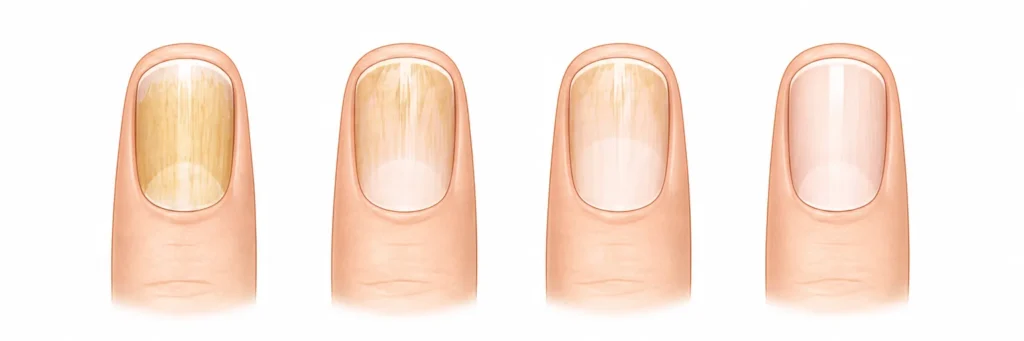
Four toenails showing fungus progression from infected to clear

If you try baking soda soaks and see no improvement in nail appearance after 4–6 weeks, or if the nail continues to thicken, discolor, or separate, that is a signal to pursue a confirmed diagnosis and prescription treatment.

Baking Soda vs OTC and Prescription Toenail Fungus Treatments

TreatmentEvidence GradeFDA-Approved for NailsNotes
Baking soda (foot soak)AnecdotalNoLab data only; no nail RCT
Undecylenic acid OTC (Fungi Nail)LimitedNo (approved for athlete’s foot)OTC antifungal active; poor nail penetration
Ciclopirox 8% (Penlac)ModerateYes5.5–8.5% complete cure (FDA label, 48 wks)
Terbinafine oral (generic)StrongYes~38% complete cure (FDA label, 48 wks)

No OTC product is FDA-approved to treat onychomycosis.

When to See a Podiatrist

See a podiatrist if the nail covers more than half the nail plate, multiple nails are affected, you have diabetes or vascular disease, the nail is painful, or home remedies haven’t helped after 4–6 weeks. A lab test (KOH scraping or PAS stain) confirms the diagnosis — roughly half of nails that look infected are another condition. Learn when to see a podiatrist →

Baking Soda for Toenail Fungus: Common Questions

No single ingredient — including baking soda — destroys established nail fungus (onychomycosis) with one cup or any amount of a foot soak. Viral social media claims about secret one-ingredient cures have no clinical evidence. The nail plate is a physical barrier that prevents most topical substances from reaching the fungus at the nail bed. Proven treatments require prescription antifungals taken for months.

No unique “Amish cure” for toenail fungus is clinically validated. Ads and social posts using this phrase are marketing for products with no special traditional or clinical basis. Common ingredients promoted this way include apple cider vinegar, essential oils, and baking soda — all of which have Anecdotal or Limited evidence at best for nail fungus.

Japan treats onychomycosis with the same evidence-based medications used globally: oral terbinafine and itraconazole for established infections, with approved topicals such as luliconazole and efinaconazole. No culturally specific “Japanese trick” for nail fungus has clinical evidence behind it. The same nail biology applies worldwide.

No foot soak has clinical trial evidence for curing onychomycosis. Foot soaks may help with odor, athlete’s foot skin symptoms, and nail softening. If you want a soak while awaiting proper treatment: warm water is the safest base; adding baking soda or white vinegar may provide mild antifungal surface action (Anecdotal grade). Tea tree oil foot soaks have Limited evidence for some antifungal activity. For the infection itself, see a doctor for a confirmed diagnosis and prescription option.

Medical disclaimer: This page is informational only and not medical advice. Consult a licensed clinician before treating onychomycosis. If you have diabetes or circulatory disease, see a podiatrist before any foot soak or treatment.

Sources: Letscher-Bru V et al., Mycopathologia 2013 (sodium bicarbonate inhibited dermatophyte growth in vitro); FDA 21 CFR 333 (OTC antifungal drug monograph — covers athlete’s foot, not onychomycosis); FDA Lamisil (terbinafine tablets) prescribing information, NDA 020539 (~38% complete cure at week 48); FDA label for ciclopirox nail lacquer (Penlac); accessed Nov 2026.

Looking for a treatment with stronger evidence?

Use our finder to match your case to the right option.