Home › Home Remedies › Hydrogen Peroxide for Toenail Fungus

Hydrogen Peroxide for Toenail Fungus (2026): Evidence and Safety

Affiliate disclosure: Some links on this page are affiliate links. We may earn a commission at no extra cost to you. See our disclosure policy →

Brown bottle and cotton balls on a bathroom counter, the cotton-ball method for hydrogen peroxide on toenail fungus

The Short Answer

Anecdotal Evidence Hydrogen peroxide (H₂O₂) is an antiseptic with some antifungal properties in lab studies at sufficient concentrations, but there are no published clinical trials testing it against toenail fungus in humans. It is not FDA-approved to treat onychomycosis. Important safety caution: do not soak feet in undiluted hydrogen peroxide or in concentrations above 3%. Higher concentrations cause tissue damage, bleaching, and chemical burns. Even 3% applied with a cotton ball is the safe upper limit for topical skin use. For confirmed nail fungus, prescription oral terbinafine has the strongest evidence (~38% complete cure in the FDA label trials; Lamisil prescribing information).

At a Glance

Evidence Strength

StrongModerateLimitedAnecdotal ✓

How we grade evidence

Safest Way People Use It

ApplyHoldRinseRepeat
Drugstore 3% on a cotton ball2–3 minutes on the nailRinse with clean water; dry wellOnce or twice daily, if tolerated

Key Facts

Trials

No human trials in toenail fungus

Strength

3% max; never undiluted

Avoid

Foot soaks, even at 3%

FDA status

Not approved for onychomycosis

Does Hydrogen Peroxide Work for Toenail Fungus?

Anecdotal Evidence

Hydrogen peroxide generates reactive oxygen species that damage fungal cell membranes and inhibit fungal growth in controlled laboratory conditions. At the concentration used in footcare (3%), it may have some surface antiseptic effect. However, the nail plate is a dense keratin barrier that significantly limits how much H₂O₂ can reach the nail bed, where dermatophytes typically live in onychomycosis.

No randomized controlled clinical trial has been published specifically testing hydrogen peroxide against toenail fungus in humans. Anecdotal reports and online claims exist, but these are not controlled evidence. H₂O₂ is not FDA-approved to treat onychomycosis.

Safety Cautions: Read Before Using H₂O₂

  • Never soak feet in undiluted hydrogen peroxide. Even 3% applied in a full foot soak for extended periods can bleach skin and nails, cause blistering, and damage healthy tissue.
  • 3% is the safe upper limit for topical skin application (cotton ball method). Higher concentrations (6%, 12%, 30%) are industrial or dental products and must never be applied to skin without medical supervision.
  • Tissue damage with prolonged contact: H₂O₂ can cause skin whitening (oxygen embolism of keratinocytes), stinging, and in severe cases, deeper tissue damage.
  • Eye contact: rinse immediately with water for 15 minutes.
  • Broken skin / nail separation: Do not apply H₂O₂ to open wounds or exposed nail bed skin.
  • Diabetes / poor circulation: See a podiatrist before any foot treatment.

How to Apply Hydrogen Peroxide to Toenails Safely

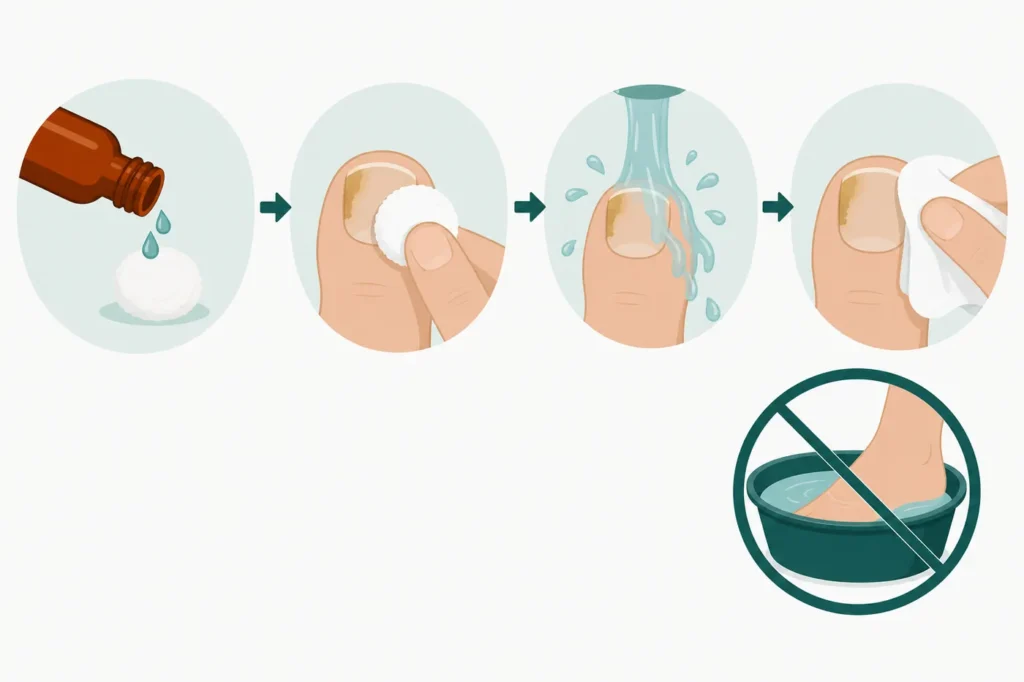
If you choose to try H₂O₂ on toenail fungus, the safest method is a cotton ball application — not a foot soak.

Illustration of applying hydrogen peroxide with a cotton ball instead of a foot soak

Cotton ball application method (3% only)

What to avoid: Do not use H₂O₂ in a foot soak basin even at 3% — extended immersion can damage healthy skin and nails. Do not cover with an occlusive dressing after application, as this increases absorption and irritation risk.

Hydrogen Peroxide vs Other Home Remedies

TreatmentEvidenceFDA-approved?Key safety note
Hydrogen peroxide (3%)Anecdotal EvidenceNoCotton ball only; never foot soak; 3% max
Apple cider vinegarAnecdotal EvidenceNoDilute 1:1; never undiluted
Tea tree oilLimited EvidenceNoCan cause allergic dermatitis
OTC undecylenic acidLimited EvidenceNo (not for nail)Generally safe as directed
Oral terbinafine (Rx)Strong EvidenceYesDrug interactions; liver monitoring in high-risk

See all home remedies compared →

OTC alternatives with slightly more evidence:
Fungi-Nail (undecylenic acid) — Limited evidence, affiliate link.
Kerasal — Cosmetic nail softener, affiliate link.

When to See a Doctor

See a clinician if: the nail is worsening despite home treatment, it is painful or the toe is red and swollen, you have diabetes or circulatory disease, or you notice skin damage from home treatments. Prescription oral terbinafine has the strongest clinical evidence for onychomycosis.

There is no clinical trial confirming that H₂O₂ soaks clear nail fungus. Foot soaking in hydrogen peroxide is not recommended — even 3% solution can bleach and damage healthy skin with extended contact. A cotton ball application to the nail surface is a safer method, though evidence for nail efficacy is still Anecdotal.

3% (drugstore standard, brown bottle) is the safe maximum for topical skin application. Do not use 6%, 12%, or higher concentrations — these are industrial or dental products that can cause serious tissue damage and chemical burns. Even 3% should be applied only with a cotton ball, not as a full foot soak.

Yes. H₂O₂ is an oxidizing bleaching agent and can lighten nails and surrounding skin with repeated application. This cosmetic whitening effect does not mean the fungus is being treated. Yellowing from onychomycosis is caused by fungal infiltration of the nail, not surface discoloration, and bleaching will not address the underlying infection.

Medical disclaimer: This page is informational only and not medical advice. If you have diabetes, poor circulation, or any open skin lesions on your feet, see a podiatrist before attempting any home treatment.

Sources: L.I.ON. / Sigurgeirsson et al., BMJ 1999;318:1031; FDA prescribing information for Lamisil (terbinafine tablets); Hydrogen peroxide toxicity: Hydrogen Peroxide (3%) Safety Data Sheet, U.S. National Library of Medicine Hazardous Substances Data Bank; AAFP 2015 (prevalence 3–12%).

Find the right treatment for your case.

Use our finder for a personalised recommendation.