Home › Treatments › Terbinafine Side Effects
Terbinafine Side Effects: What the FDA Label Says (2026)
By Best Toenail Fungus Treatments · Reviewed 15 Nov 2026 · 12 min read

Home › Treatments › Terbinafine Side Effects
By Best Toenail Fungus Treatments · Reviewed 15 Nov 2026 · 12 min read
Terbinafine (brand: Lamisil) is the most commonly prescribed oral treatment for onychomycosis, with strong evidence for toenail fungus (~38% complete cure in the FDA label trials; Lamisil prescribing information). Most people tolerate it well. The most important risk is hepatotoxicity — rare cases of liver failure have been reported; baseline liver function tests are required before starting. The most common lasting side effect is taste or smell disturbance. Terbinafine is a CYP2D6 inhibitor and interacts with several medications. Talk to your doctor or pharmacist before starting terbinafine.
Evidence Strength
Strong ✓ModerateLimitedAnecdotal
Safety Checkpoints
| Before | During | After | Rarely |
|---|---|---|---|
| Baseline liver tests (ALT/AST) | Watch for jaundice, dark urine, fatigue | Most taste changes resolve | Taste or smell loss over a year |
Key Facts
Status
Prescription only
Efficacy
~38% complete cure (FDA label)
Most common
Stomach upset, rash
Interactions
CYP2D6 inhibitor
The following side effects are reported in the FDA label for oral terbinafine (NDA 020539; DailyMed). Most are mild to moderate and resolve after the treatment course ends.
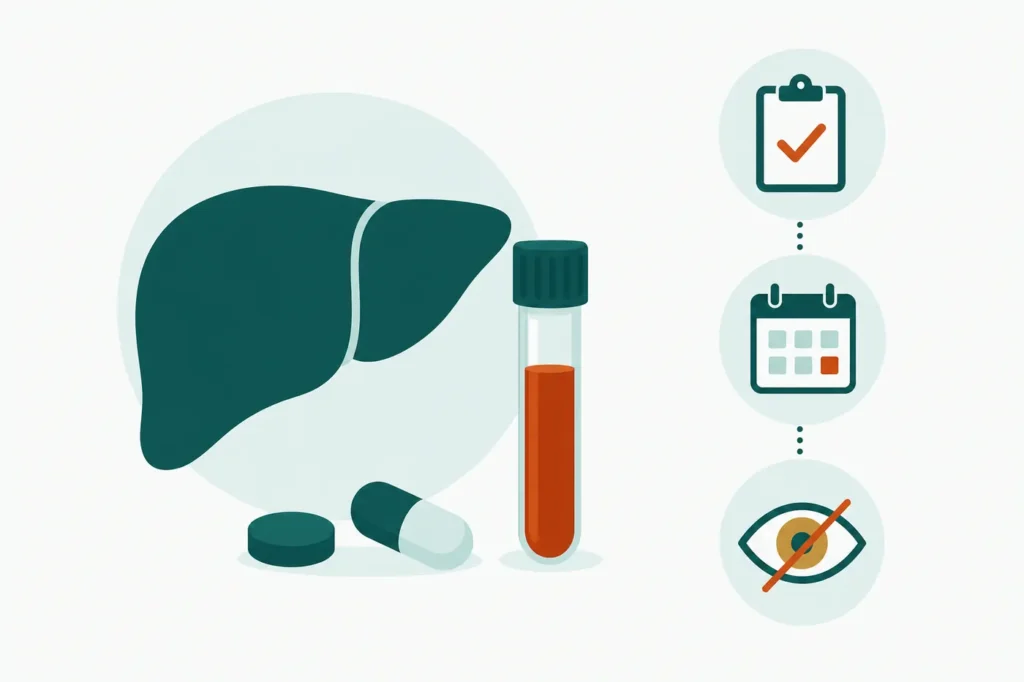
Cases of liver failure, some leading to death or liver transplant, have been reported with use of Lamisil (terbinafine) in individuals with and without pre-existing liver disease. Obtain baseline serum transaminases (AST/ALT) prior to initiating treatment. Discontinue Lamisil if biochemical or clinical evidence of liver injury develops. Terbinafine is not recommended for patients with chronic or active liver disease.
What to do before starting: Your clinician will order baseline liver function tests (LFTs) — a blood test measuring ALT and AST enzyme levels. If pre-existing liver disease is present, terbinafine should generally not be used.
Signs to watch for during treatment: Unusual fatigue, appetite loss, nausea, upper-right abdominal pain, dark urine, or yellowing of the skin or eyes (jaundice). If any of these develop, stop taking terbinafine and contact your doctor or seek prompt medical attention.
Context: The absolute risk of serious liver injury is rare in otherwise healthy individuals. The requirement for baseline LFTs reflects appropriate caution rather than a warning that most patients will experience liver problems. Millions of prescriptions are written annually; the risk-benefit calculation for most patients with confirmed onychomycosis favors treatment.
Talk to your doctor or pharmacist about your complete health history, alcohol use, and all medications before starting terbinafine.
Taste disturbance is one of the most commonly reported lasting side effects of terbinafine. The FDA label states:
These effects can significantly impact quality of life and appetite. If you notice taste or smell changes after starting terbinafine, report them to your prescriber. Stopping treatment may allow recovery, but discuss the decision with your doctor — do not stop without medical advice if you are part-way through a course.
Terbinafine is a potent inhibitor of CYP2D6, an enzyme responsible for metabolizing many commonly prescribed drugs. This means terbinafine increases the blood levels of CYP2D6-sensitive medications, which can amplify their effects and side effects.
Tell your doctor and pharmacist about all prescription, OTC, and herbal medications before starting terbinafine. Your clinician may need to adjust doses of other drugs or choose an alternative antifungal if interactions are significant. Do not stop other medications without medical guidance.
Talk to your doctor or pharmacist if any of these apply to you. Alternative antifungals (itraconazole, ciclopirox topical) may be appropriate options.
Strong Evidence Evidence grade: Strong
When evaluating terbinafine, the side effect profile must be weighed against its effectiveness:
The decision is a clinical one. For confirmed onychomycosis in a healthy adult with no drug interactions or liver history, terbinafine’s evidence strongly supports its use. For patients with the risk factors listed above, alternatives exist.

If you cannot take terbinafine, these options have clinical evidence for onychomycosis:
For a full evidence comparison, see our treatment comparison page. Compare all toenail fungus treatments →
Terbinafine is a well-tolerated medication for most healthy adults. Its most serious risk is hepatotoxicity — rare cases of liver failure (some fatal) have been reported. The FDA requires baseline liver function tests before prescribing. The most common lasting side effect is taste or smell disturbance, which usually resolves but can persist. As a CYP2D6 inhibitor, it interacts with several common medications. Your clinician will screen for these risks before prescribing. For most patients with confirmed onychomycosis and no contraindications, the benefit-risk balance favors treatment.
Terbinafine 1% cream (OTC) is FDA-approved for athlete’s foot (tinea pedis), ringworm (tinea corporis), and jock itch (tinea cruris) — all skin fungal infections. It is not effective for toenail fungus because the cream cannot penetrate the nail plate. The form that treats toenail fungus is the oral tablet (prescription). See our terbinafine cream guide →
Constipation is not a commonly listed side effect of terbinafine in the FDA label. The GI effects most frequently reported are diarrhea, dyspepsia, nausea, abdominal pain, and flatulence. If you experience any persistent GI symptoms while taking terbinafine, tell your doctor or pharmacist, who can determine whether it is related to the medication.
Based on the FDA label and clinical guidance: Do not take terbinafine if you have active liver disease or significant liver enzyme elevation. Tell your doctor about all medications — especially antidepressants, beta-blockers, and other CYP2D6-sensitive drugs. Report any signs of liver problems (fatigue, dark urine, jaundice) immediately. Do not stop terbinafine mid-course without medical advice, as incomplete treatment increases relapse risk. Alcohol can add stress to the liver — discuss alcohol use with your clinician. Talk to your doctor or pharmacist for guidance specific to your health history.
Medical disclaimer: This page is informational only and not medical advice. The FDA label is the authoritative source for terbinafine prescribing information. Consult a licensed clinician before starting, stopping, or changing any medication.
Sources: FDA label terbinafine tablets (NDA 020539); DailyMed (setid 6dc279cc-9861-4fa8-8083-ca3b3c57b513, accessed Nov 2026); FDA Lamisil (terbinafine tablets) prescribing information, NDA 020539 (~38% complete cure at week 48); Elewski et al., JAAD 2013 (Jublia 15–18%); Mayo Clinic, Cleveland Clinic (terbinafine drug info, accessed Nov 2026); AAFP 2015 (onychomycosis prevalence 3–12%).
Use our finder to match your case to the right option, including topicals if you cannot take oral antifungals.